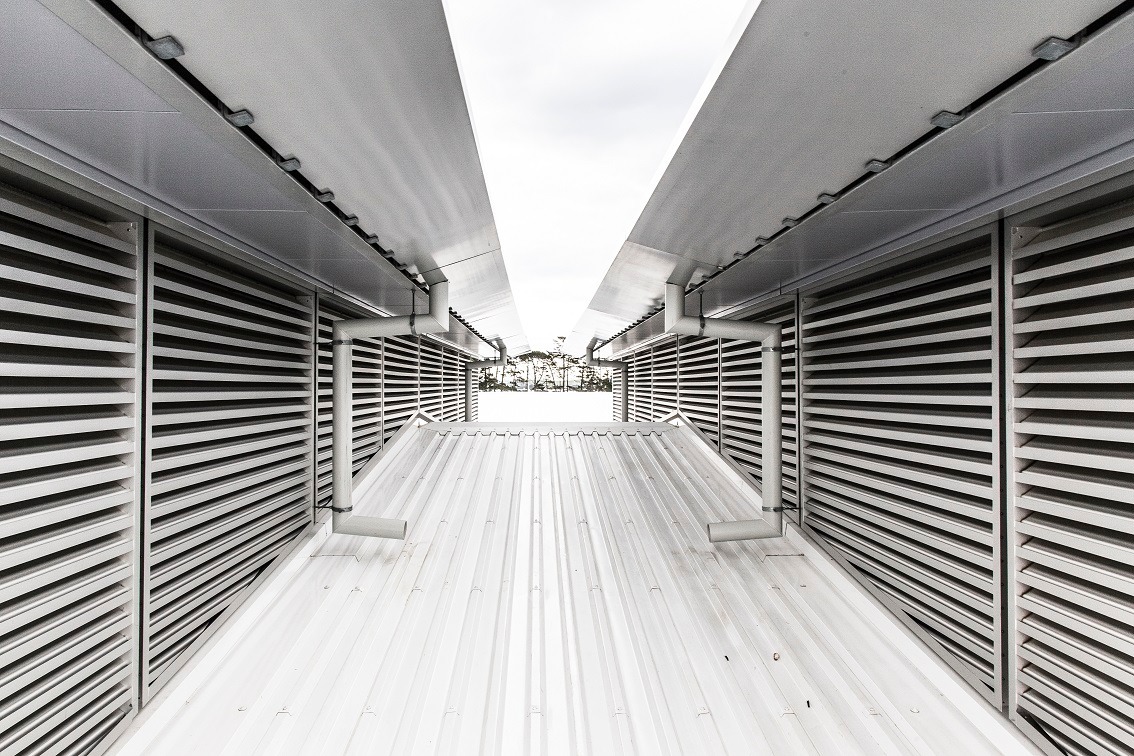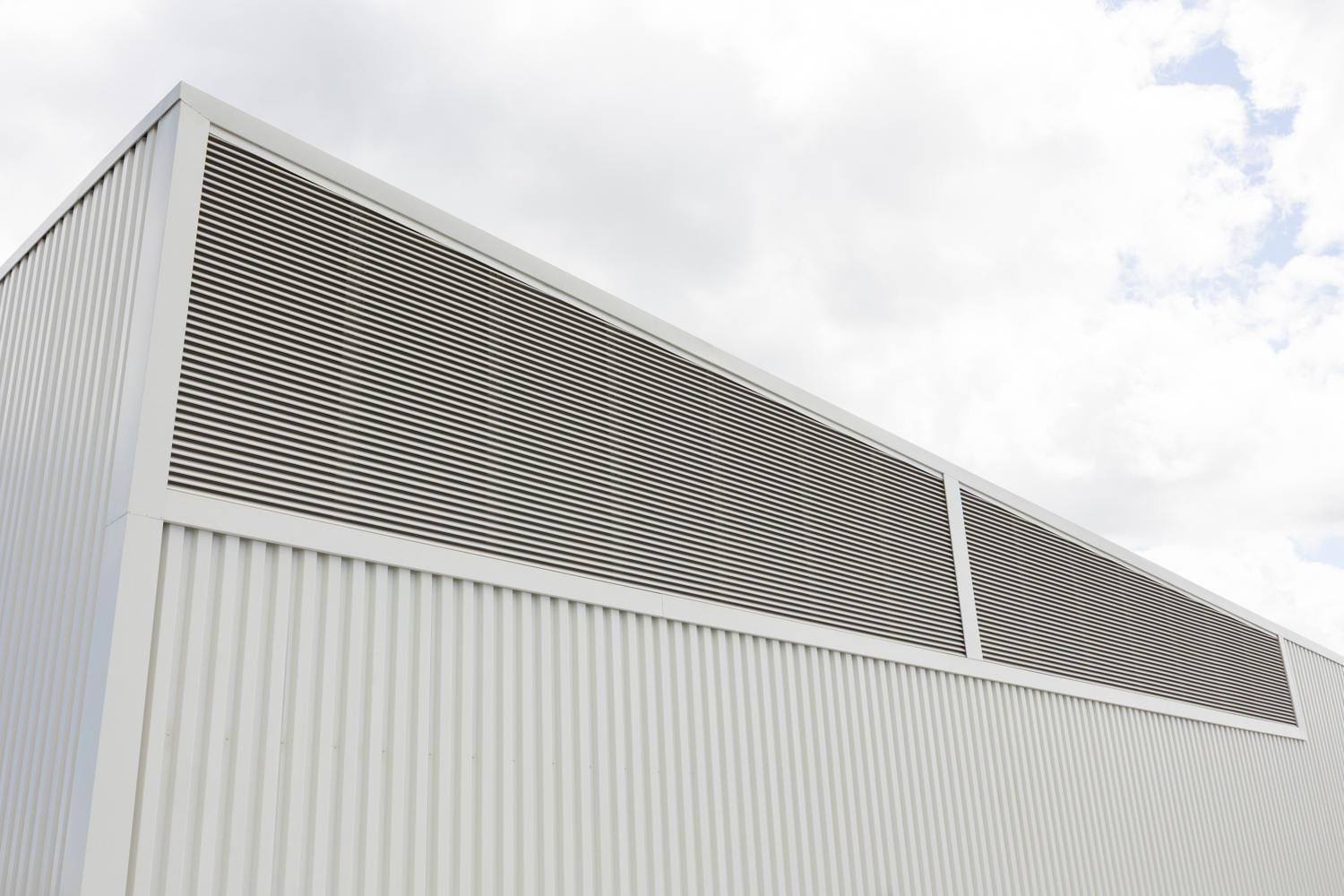
Ngā Huia is the newest specialist research and teaching building at Massey University’s veterinary campus in Palmerston North. The project included several large, non-standard ventilation openings that needed high weather protection and careful structural detailing. Ventuer supplied custom VL-3SD louvre banks and full structural engineering to help deliver a clean, high-performing façade solution for this complex facility.
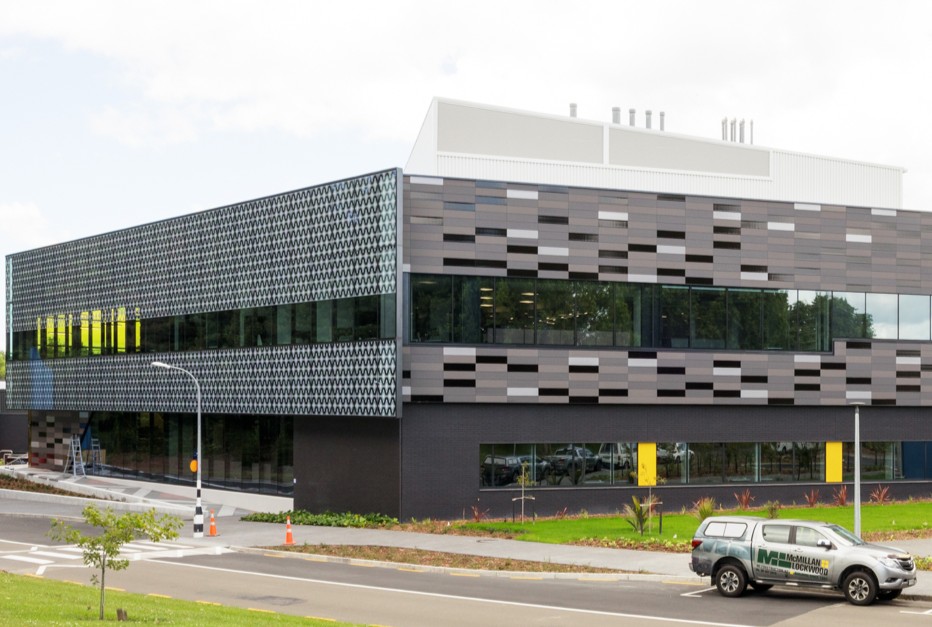
Ngā Huia is the latest facility delivered as part of Massey University’s long-term redevelopment of the School of Veterinary Science at the Manawatū campus. The $70 million building brings together specialised laboratories, academic offices and a large student hub, and completes a wider capital programme valued at $160 million.
The building incorporates cultural elements developed in partnership with Rangitāne and features interior finishes made from recycled rimu salvaged from the original vet tower. It sits alongside earlier redevelopment stages and now forms a central part of the teaching and research environment for veterinary staff and students.
CCM Architects led the façade design, WSP provided the façade engineering, and McMillan & Lockwood delivered the project as the main contractor.
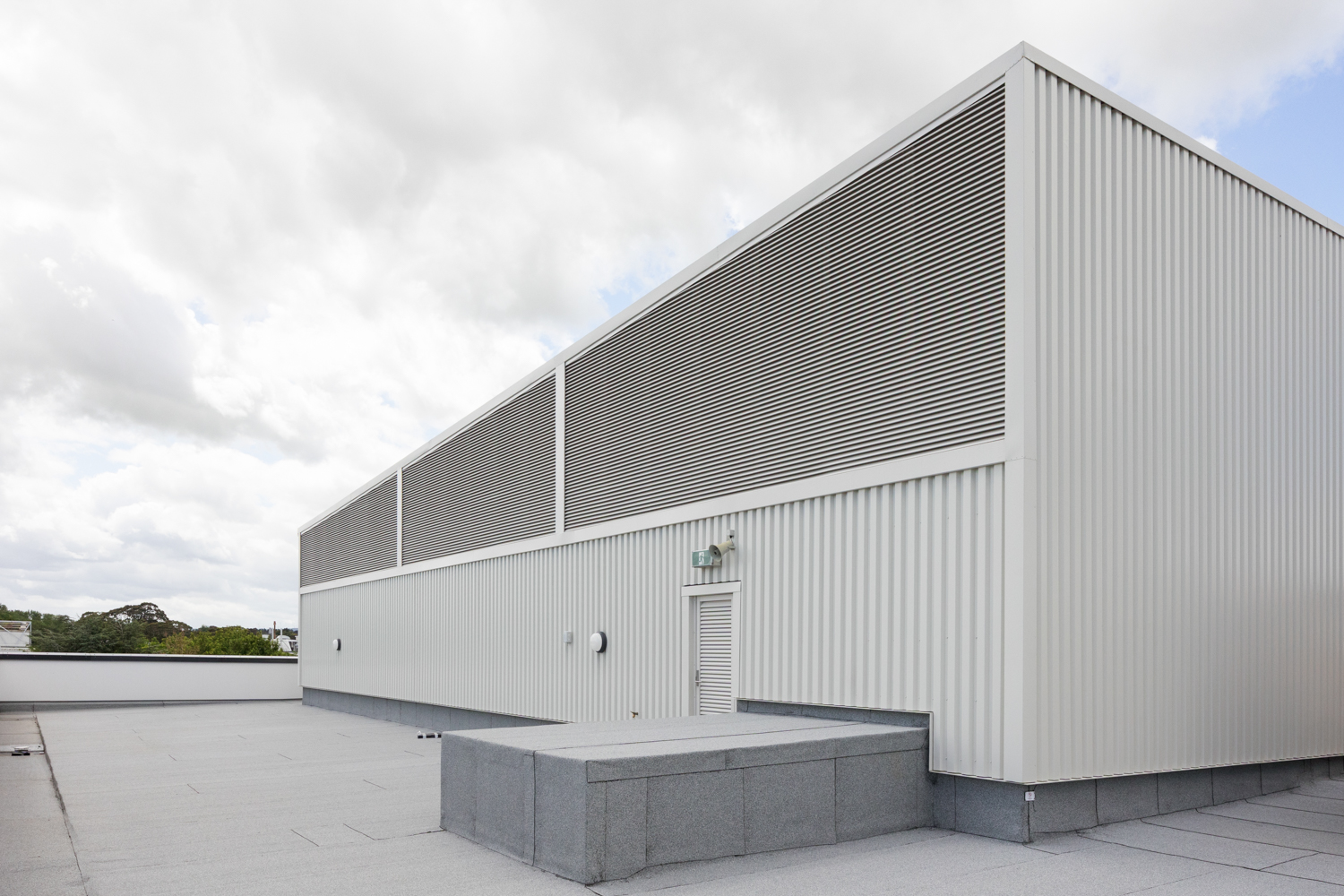
Ventuer supplied several large banks of VL-3SD weather-protection louvres, selected for their ability to provide reliable airflow and strong resistance to wind-driven rain in an exposed location.
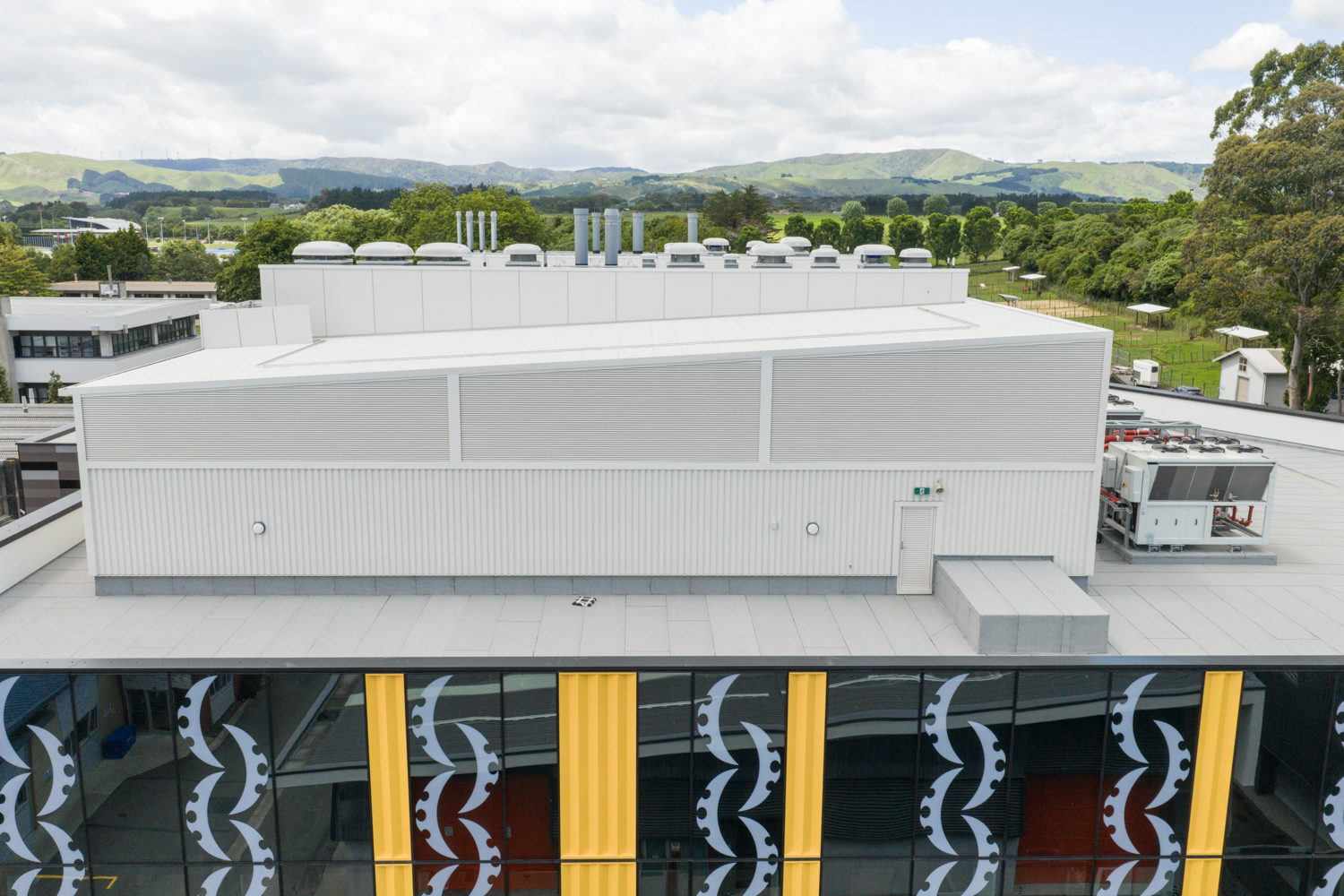
A distinctive feature of the building envelope is the number of raking and triangular ventilation openings. These were significant façade elements rather than small inserts, so the geometry needed to be handled accurately. Each opening followed the angled façade lines, which meant conventional rectangular louvre units were not suitable.
Structural movement added to the complexity. Several primary structural members were designed to deflect independently under load. If the louvres had been fixed directly to these members, the movement would have transferred into the panels and created long-term performance issues. The louvre support system had to absorb this movement while keeping the panels stable and correctly aligned.
The project also required a full engineering package from Ventuer, including structural calculations and a PS1 to support the building consent requirements.
Ventuer produced custom-shaped VL-3SD louvre panels for each opening, adjusting the blade layout, mullion spacing and perimeter frames so the units aligned neatly with the façade geometry. The shallow 150 mm frame depth of the VL-3SD helped maintain clean junctions with the cladding.
The most significant part of Ventuer’s contribution was the design of the secondary support structure. This system was engineered to take the full wind and service loads of the louvre banks while allowing the primary structure to move independently. Ventuer supplied complete structural calculations and a PS1, confirming compliance with the façade engineer’s requirements.
During detailed design, interfaces and fixings were coordinated with the architectural, structural and façade requirements, ensuring the installation sequence was practical and the final result met the functional and aesthetic expectations of the project.
The completed louvre banks form a clean, integrated part of the Ngā Huia façade. They provide dependable weather protection, deliver the required airflow to the research spaces and follow the building geometry without compromising the architectural design. The engineered support system isolates the panels from structural movement, reducing long-term maintenance risks and helping ensure reliable performance over the life of the building.
For Massey University, the solution supports a highly serviced research environment within a building that has been designed for long-term use. For the contractor, the combination of custom fabrication, clear drawings and structural sign-off helped streamline installation.
Ngā Huia is now a key teaching and research facility for the School of Veterinary Science, and Ventuer’s engineered louvre package played an important role in resolving the geometric and structural challenges in the façade.
End User: Massey University
Architect: CCM Architects
Façade Engineer: WSP
Main Contractor: McMillan & Lockwood
Products Supplied: VL-3SD Ultimate Weather Protection Louvres