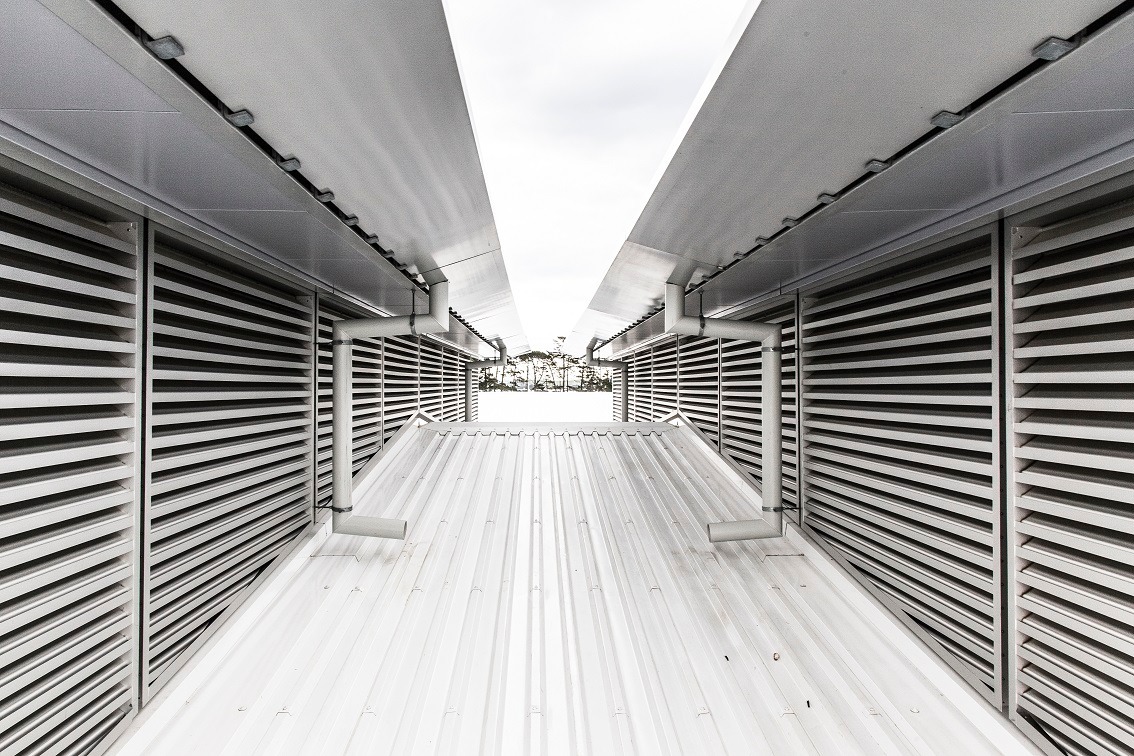
If you need airflow and weather protection, drainable louvres are designed to manage wind-driven rain by capturing and directing water away.

Drainable louvres are often specified to improve rain-defence performance, particularly in taller installations. Understanding the difference between standard and drainable louvres can help ensure effective airflow while minimising water intrusion.
A non-drainable louvre is the basic type. Its blades shed water down the front face onto the blade below, with no channels or features to collect the water. The water simply cascades down the louvre.
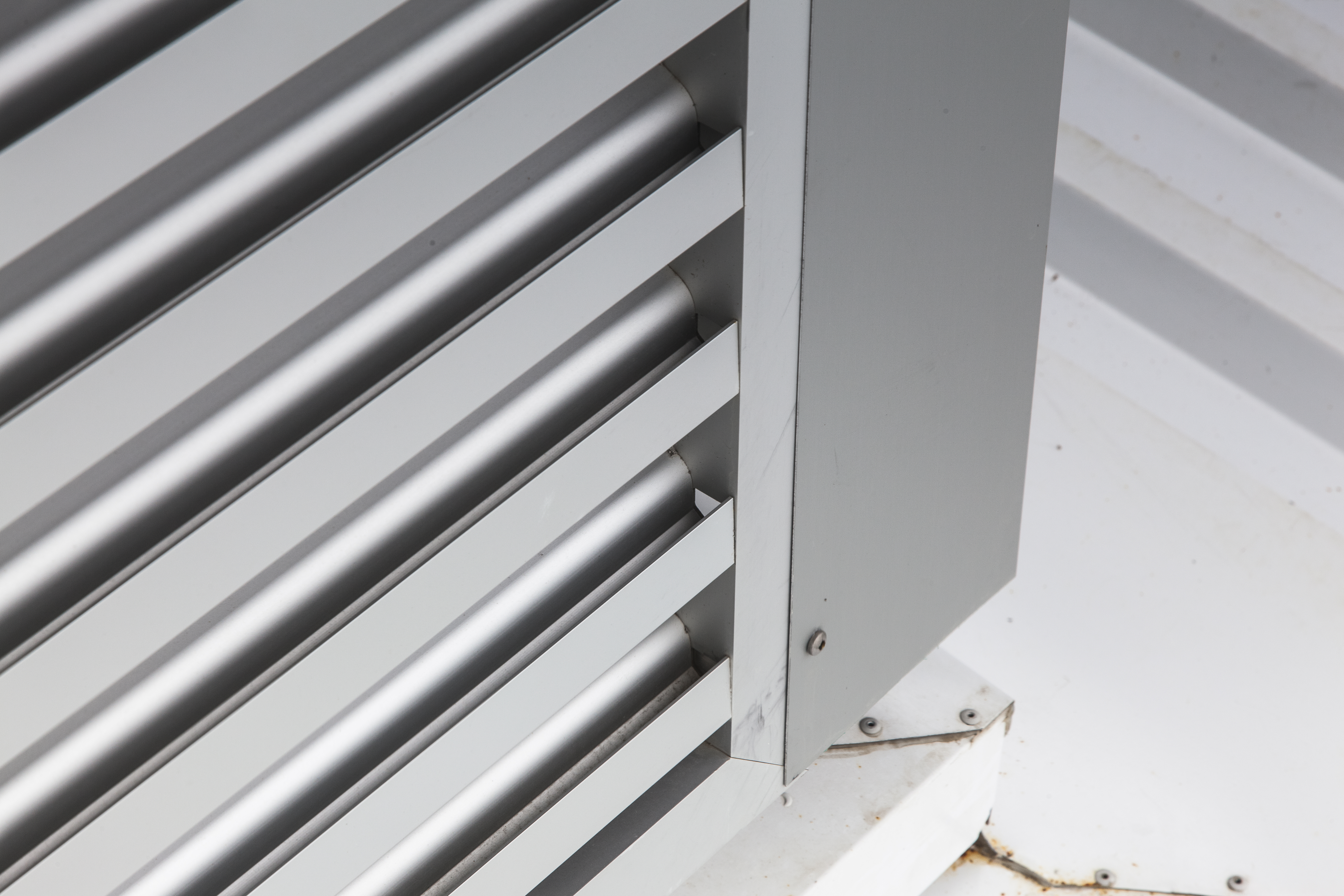
A drainable louvre has a similar appearance but includes a front lip and an internal drainage path in each blade. This system captures the water and redirects it out through the frame instead of allowing it to fall onto the blades below.
As a general guideline, for horizontal single-bank louvres taller than approximately 1.5 metres, it is usually best to specify a drainable version.
In non-drainable louvres, wind-driven rain hits a blade and drips onto the one below. Each successive lower blade receives both direct rainfall and runoff from the blades above. This cumulative effect is known as the swamping effect. When swamped, water sits in the airstream path, making droplets more likely to be carried into the building.
Most louvre performance tests, regardless of standard, are conducted on small panels around one metre high. A non-drainable louvre may perform well in these tests. However, when installed at two or three metres tall, the swamping effect increases significantly. The cumulative water load grows with panel height, and real-world performance can be noticeably worse than suggested by the test results.
For louvre openings tall enough for water to accumulate as it drains from blade to blade, specifying a drainable louvre is the safer option. Drainable louvres help maintain consistent rain-defence performance across the full height of the installation.