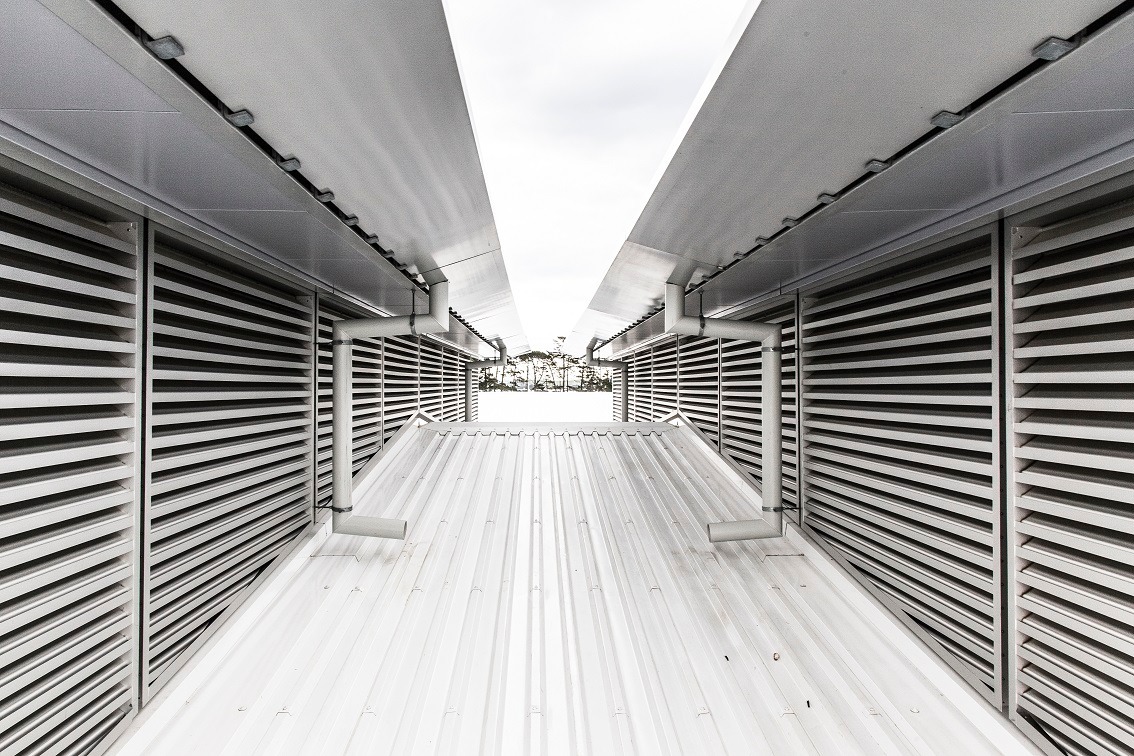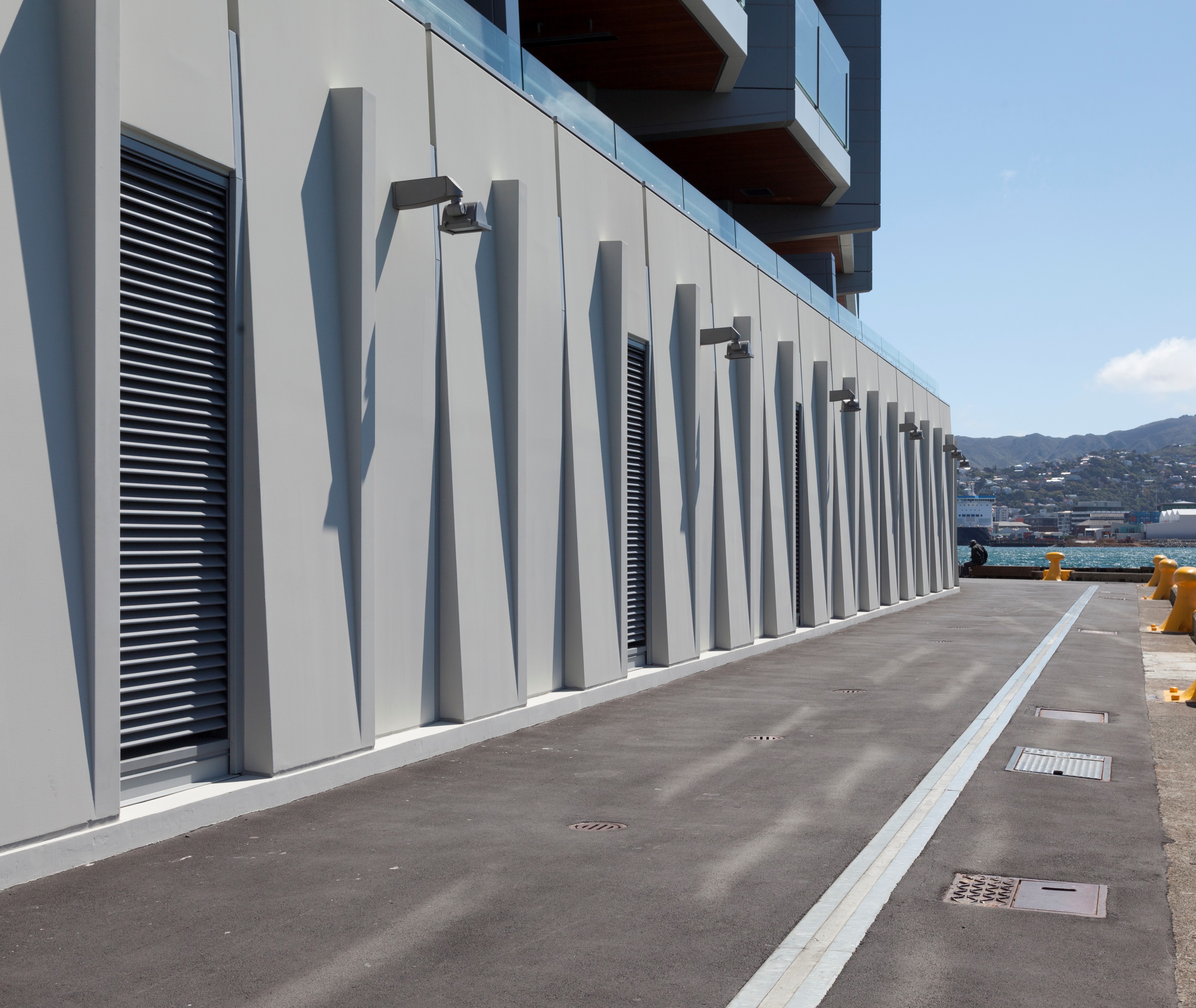
A drainable louvre is a type of weather-resistant ventilation louvre designed to collect, control,
and safely drain water that enters the louvre under wind-driven rain conditions, rather than
simply trying to block it. In simple terms water that makes its way in, is deliberately managed
and drained away.
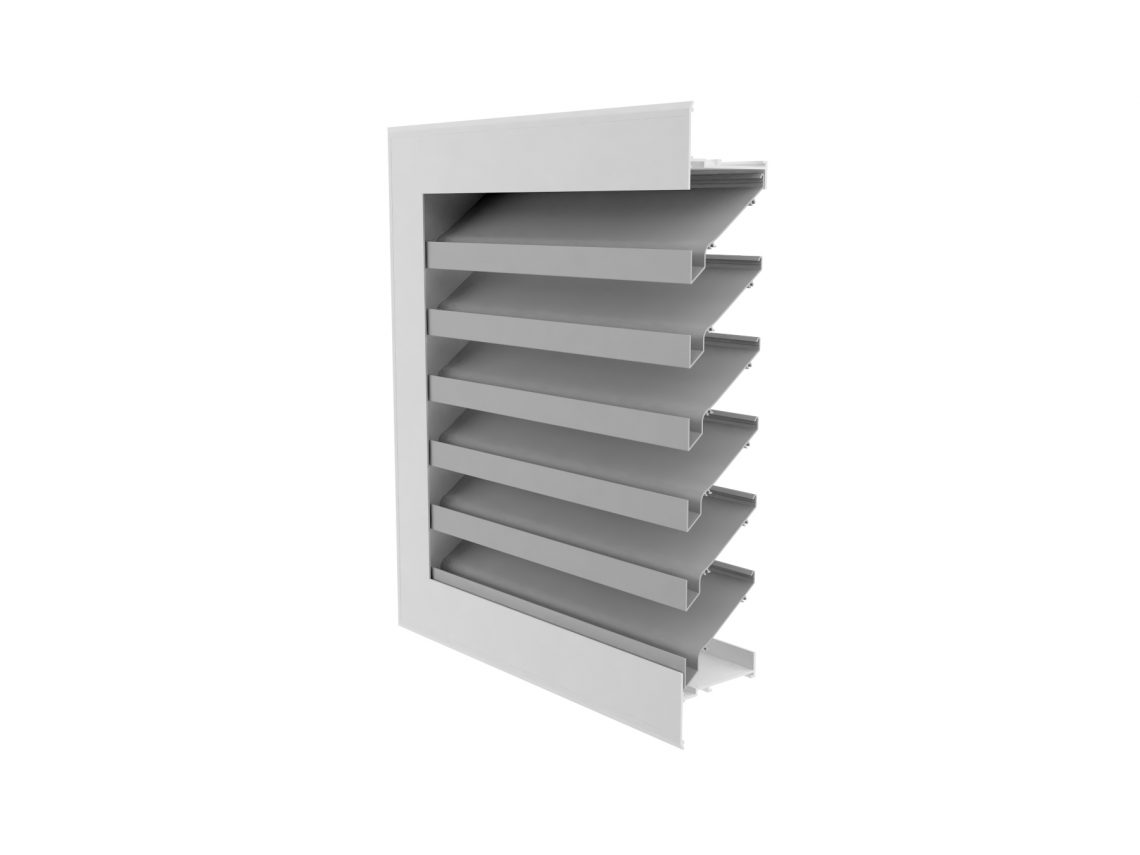
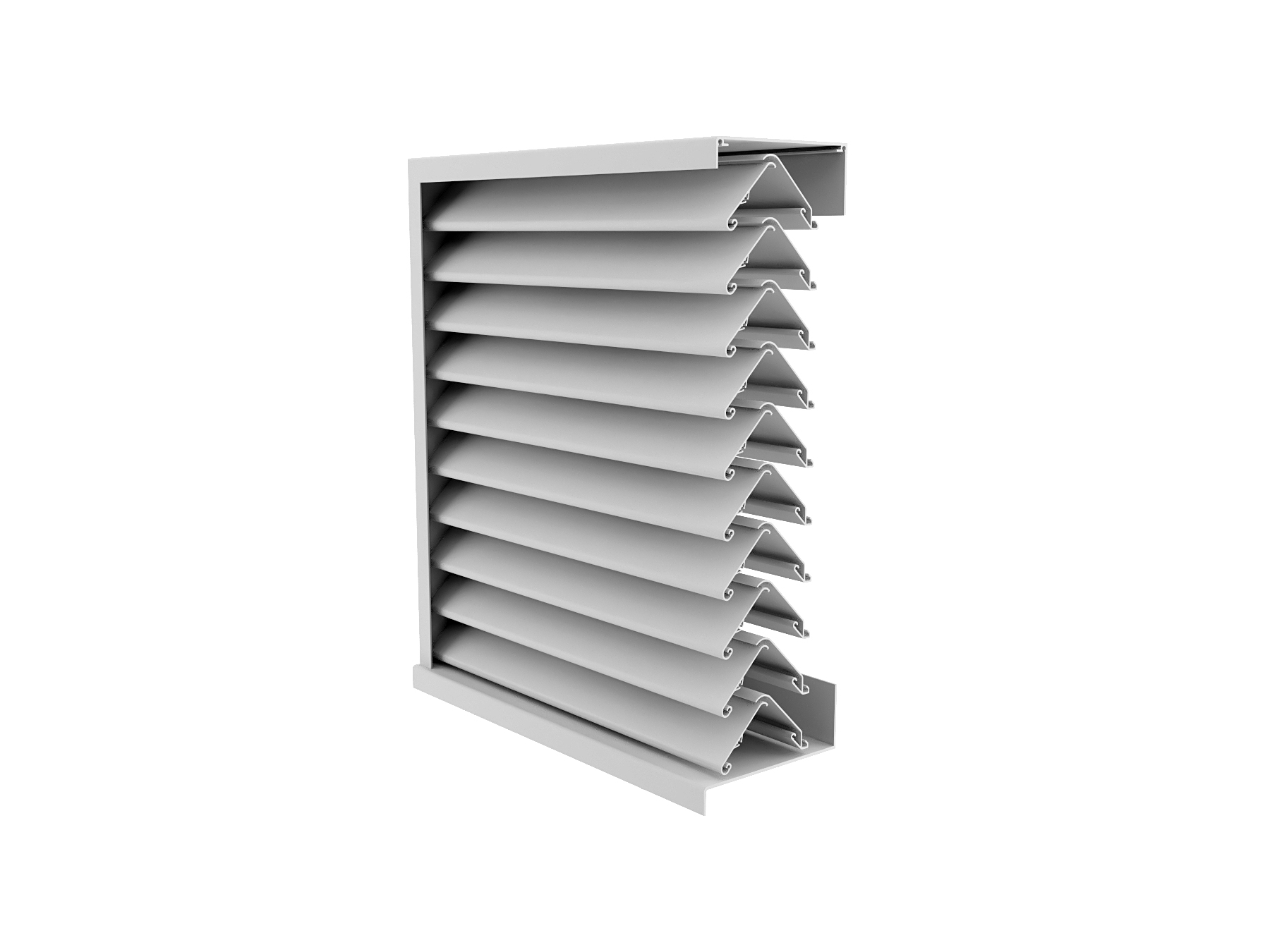
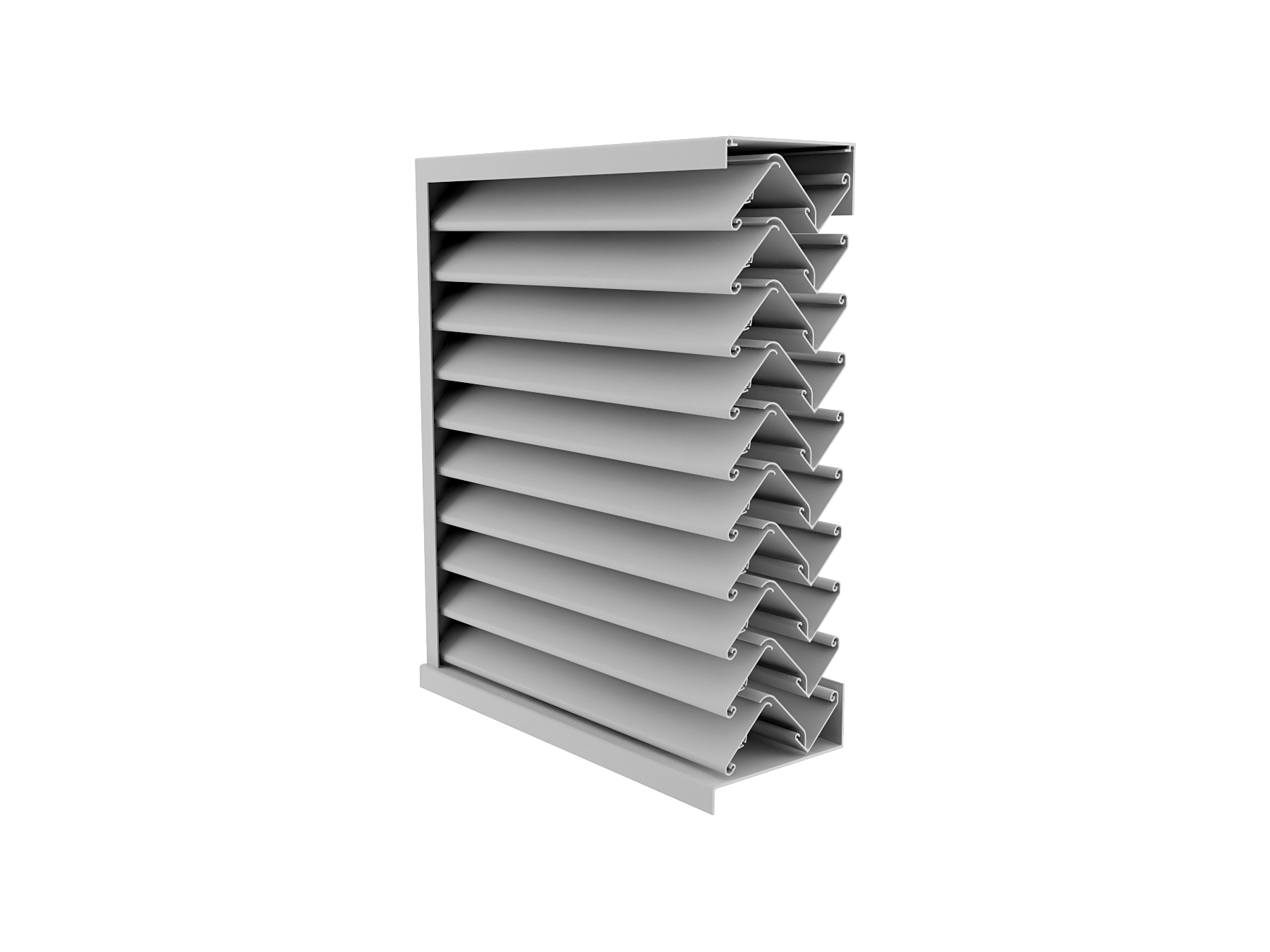
A drainable louvre is designed to manage wind-driven rain by capturing water and safely draining it away from the building.
Instead of relying only on blade angles to deflect rain, a drainable louvre actively collects and channels water out of the system, allowing airflow to continue while protecting interior spaces.
Several key design features make this possible.
1. Drainable Blades
In a drainable louvre, the blades themselves play a role in water management.
Each blade is shaped with internal gutters or channels that capture water when rain strikes the blade surface. Rather than allowing water to fall straight through the louvre, the blade profile directs the collected water toward the side jambs of the louvre frame.
2. Vertical Drainage Channels
Once water reaches the sides of the louvre, it enters vertical drainage channels built into the frame.
These channels function like internal downpipes, allowing water to travel down through the louvre assembly without entering the ventilation opening.
3. Sill Tray Drainage
At the base of the louvre sits a sill tray, which collects the drained water from the frame.
From here, the water is discharged back to the exterior through weep holes or by flowing over the front edge of the sill.
4. Multi-bank Construction
Drainable louvres are often designed with two or more banks of blades.
This multi-bank arrangement helps reduce wind pressure inside the louvre and improves rain separation efficiency, particularly during severe wind-driven rain events.
Why Drainable Louvres Exist
Completely blocking wind-driven rain is unrealistic at higher wind pressures. Instead, drainable louvres are designed to manage the water that enters the system.
By capturing and draining water internally, they:
For this reason, vertical louvre systems can also function as drainable louvres, depending on their blade geometry and drainage design. The VL-VF2 is an example, more information here.
Typical Applications
Drainable louvres are commonly specified where water ingress risk is critical, including:
How They Differ from Single-Bank Louvres
| Feature | Single-bank louvre | Drainable louvre |
| Blade depth | Shallow |
Deep, profiled |
| Water management | Deflects only |
Captures & drains |
| Drain tray | Yes |
Yes |
| Rain defence | Moderate |
High / Very High |
| Pressure Loss | Limited |
High |
Standards and Performance Testing
In testing standards such as BS/EN 13030 or AMCA 500-L, drainable louvres typically achieve higher rain defence classifications.
They are able to maintain acceptable water penetration performance at much higher test pressures, which is why they are often specified for projects where compliance, resilience, and operational reliability matter more than façade depth or cost.