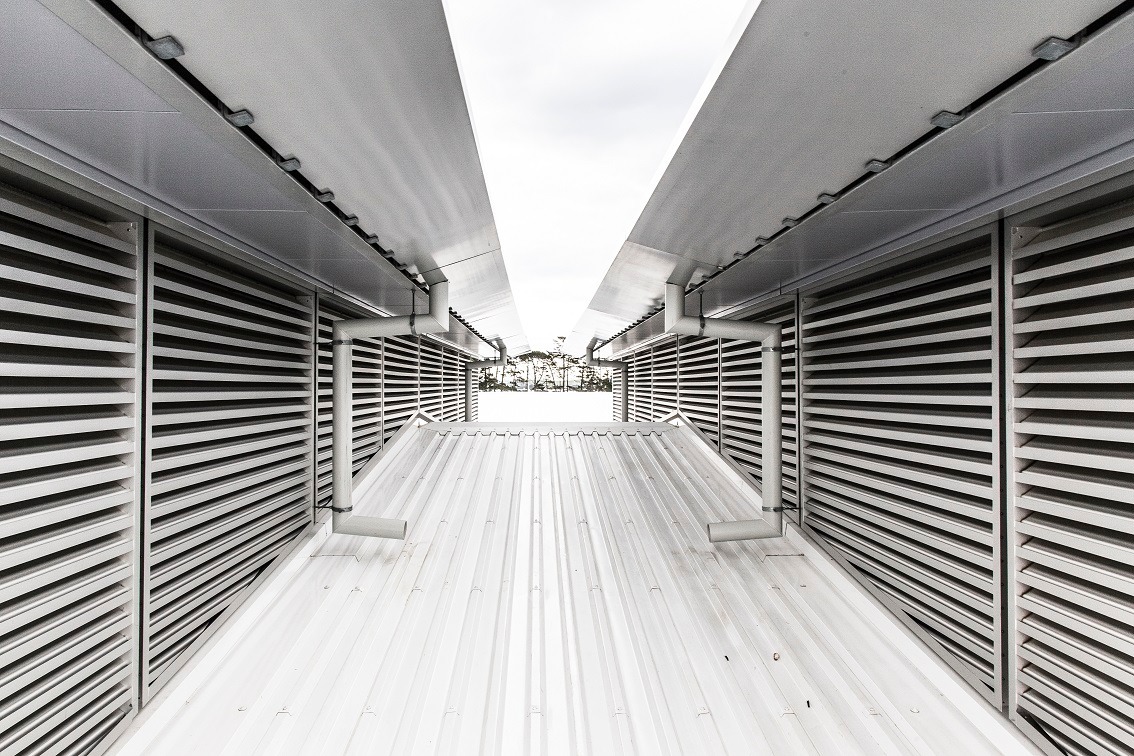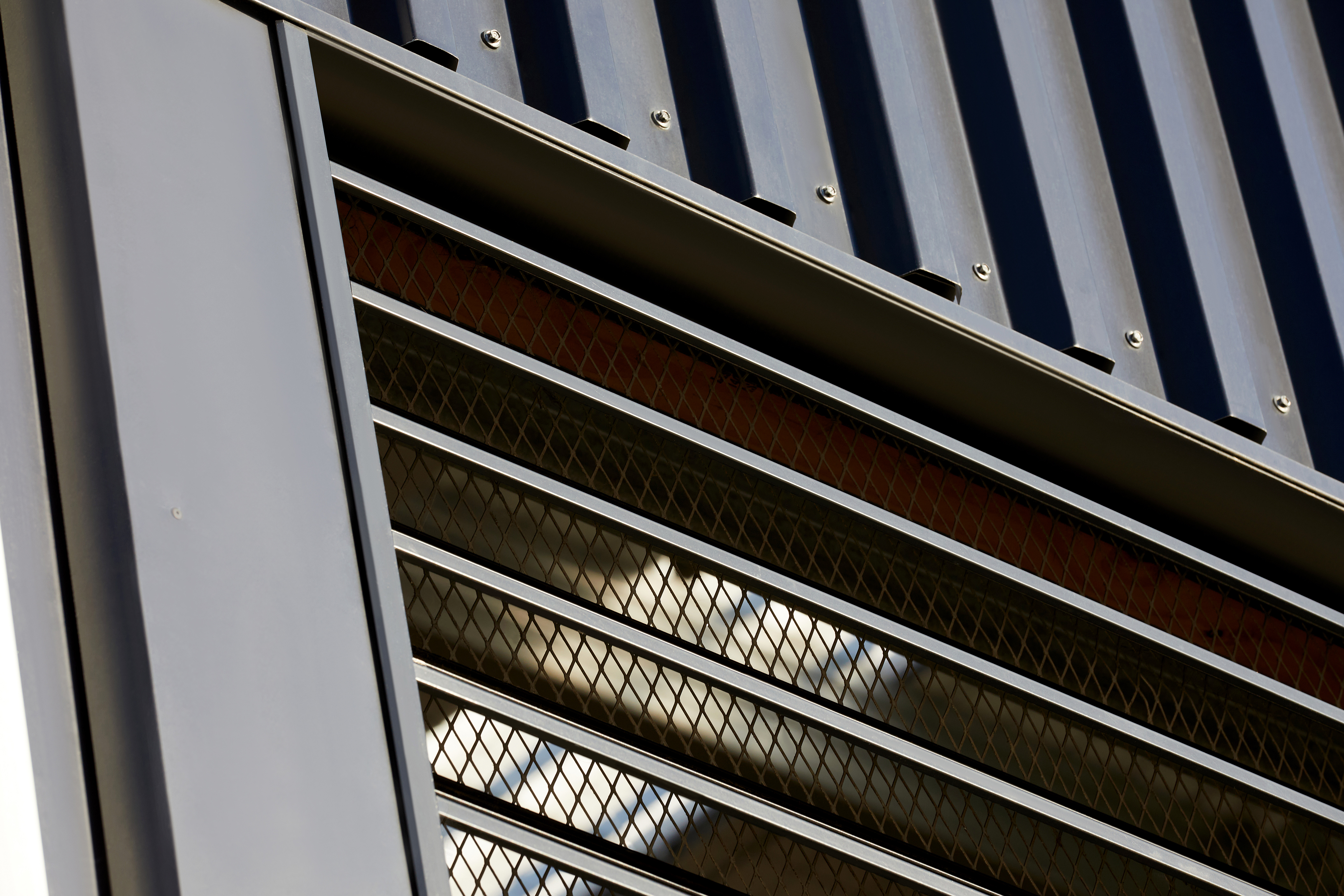
Free area is a rough proxy, while actual performance is governed by pressure loss. It is calculated by measuring the smallest gap in the louvre blades and expressing it as a percentage of blade spacing.

Free area and related terms are commonly used to describe louvre performance, but they are often misunderstood. While free area provides a rough estimate of airflow, actual performance is governed by pressure loss.
Geometric free area is calculated by measuring the smallest gap between louvre blades and expressing it as a percentage of the blade spacing. For example, if the throat opening is 50 mm and the blade spacing is 100 mm, the geometric free area is 50%.
This method is simple but does not account for the full panel size or other airflow obstructions, so it provides only a rough estimate of performance.
A more accurate measure is Active Free Area, which considers the real panel size and all airflow obstructions often overlooked in simple calculations. These can include internal mullions, dead blades, and framing.
Active free area is calculated by multiplying the geometric free area percentage by the panel size, then subtracting inactive or dead areas. This provides a more realistic representation of how much air can pass through a louvre.
The most precise metric is Aerodynamic Free Area. This is calculated by multiplying the louvre’s coefficient of discharge by the active core area of the tested sample and then comparing that result to the overall louvre size.
The coefficient of discharge describes how efficiently air passes through the louvre compared with an ideal, frictionless opening.
For example, a tested louvre with a coefficient of 0.265 and a core area of 0.937 m² has an effective aerodynamic area of 0.248 m². Dividing this by the total sample area of 1.05 m² gives an aerodynamic free area of approximately 24%.
As these calculations show, free area can be complex and easily misunderstood. Where possible, it is recommended to use a louvre calculator to determine actual pressure loss rather than relying on subjective free-area values.