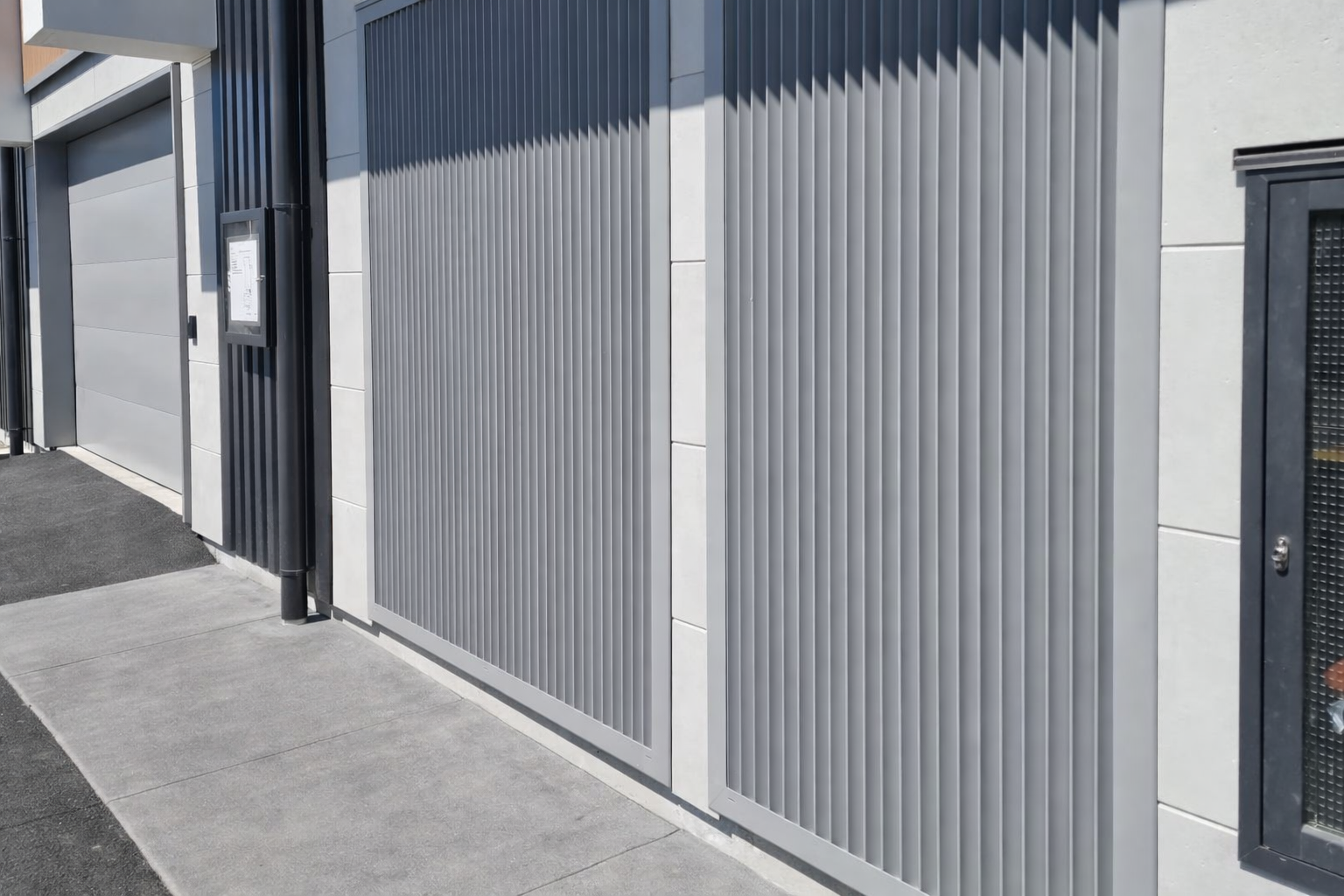
In a storm the rain doesn't fall straight down, it comes in sideways. That's why blade shape and spacing are important.
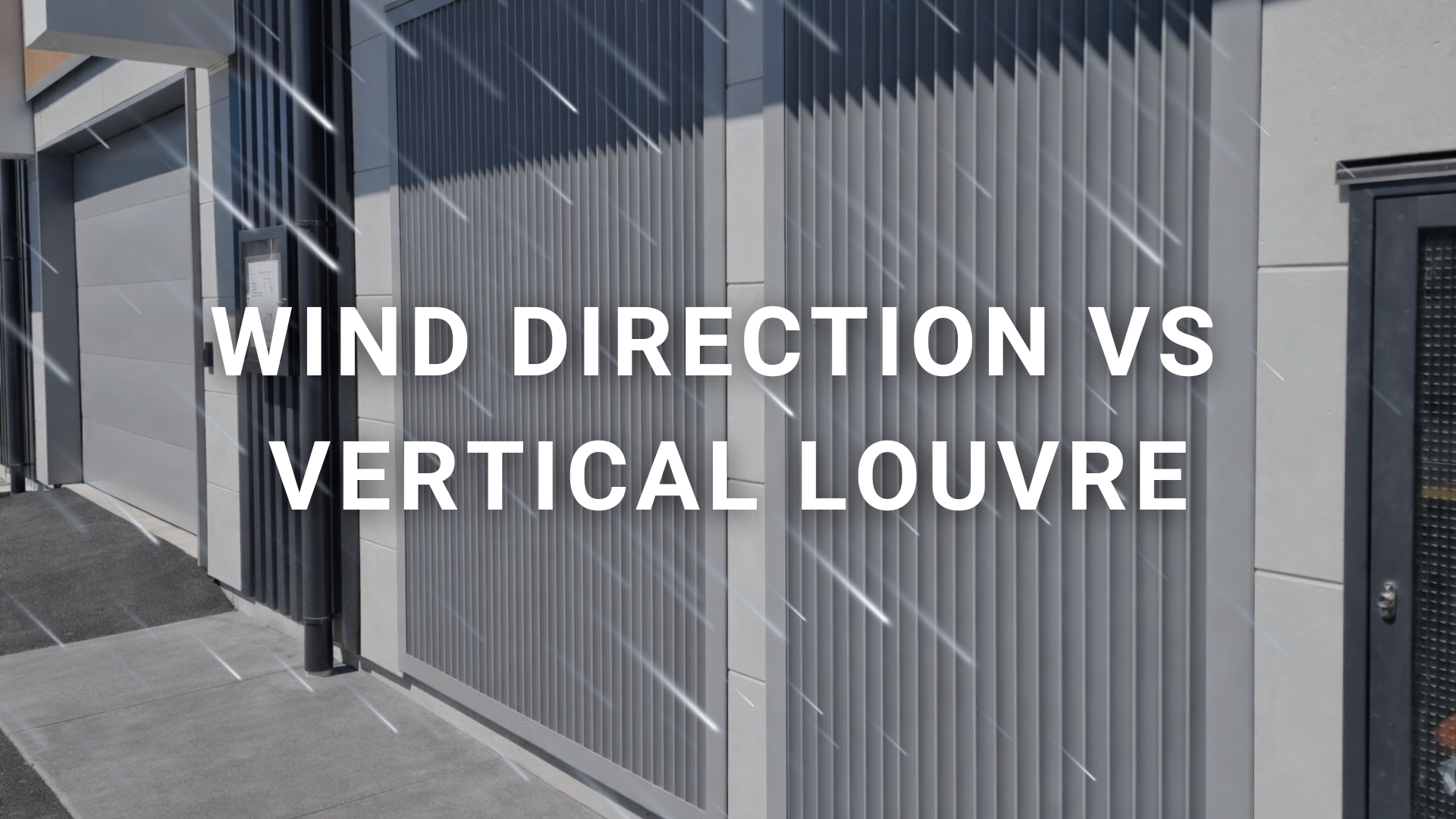
A vertical louvre has to stop wind-driven rain. In a storm, rain rarely falls straight down — it comes in sideways, and the droplets carry momentum. Even if the air changes direction, the water keeps travelling until something makes it stop. That’s why blade shape and spacing are so important. A well-designed louvre forces the air to turn sharply. The air can turn, but the water can’t, so the droplets hit the blades instead of passing through. The louvre then needs a clear path to drain that water safely to the exterior.
Louvre performance is not always intuitive. Two systems that look visually similar can perform very differently once tested. Take the VL-VF2 vertical louvre. It might seem obvious that wind-driven rain hitting the louvre horizontally could reach the back of the blade before touching any aluminium. However, two factors counteract this.
The first is the swamping effect, which doesn’t occur in vertical louvres. Water drops straight down where it hits the sill tray and is directed safely to the exterior. The second is a negative suction vortex effect. Computational fluid dynamics (CFD) modelling shows that airflow through the VL-VF2 blades creates zones of swirling air at zero velocity while air over the blade tips moves at 9 m/s. These zones slow and guide water down the blades into the sill tray, preventing it from penetrating the façade.
The VL-VF2 holds the highest weather rating across the Ventuer louvre range, showing that vertical louvres can perform even better than intuition suggests.