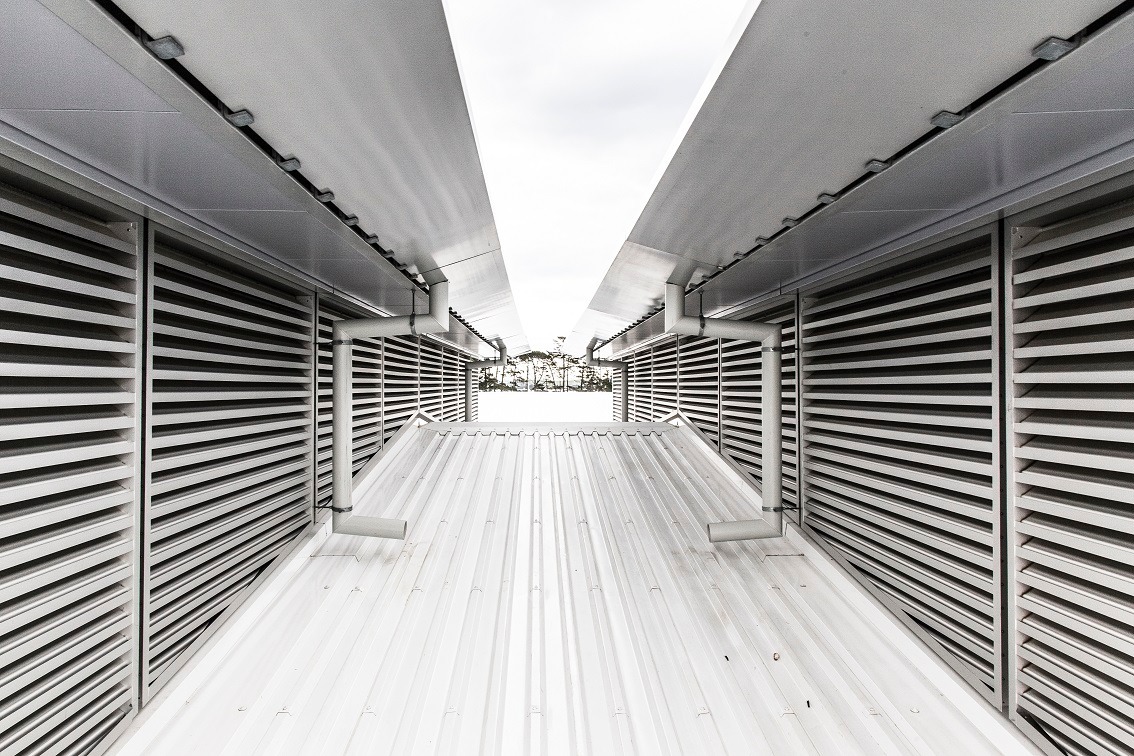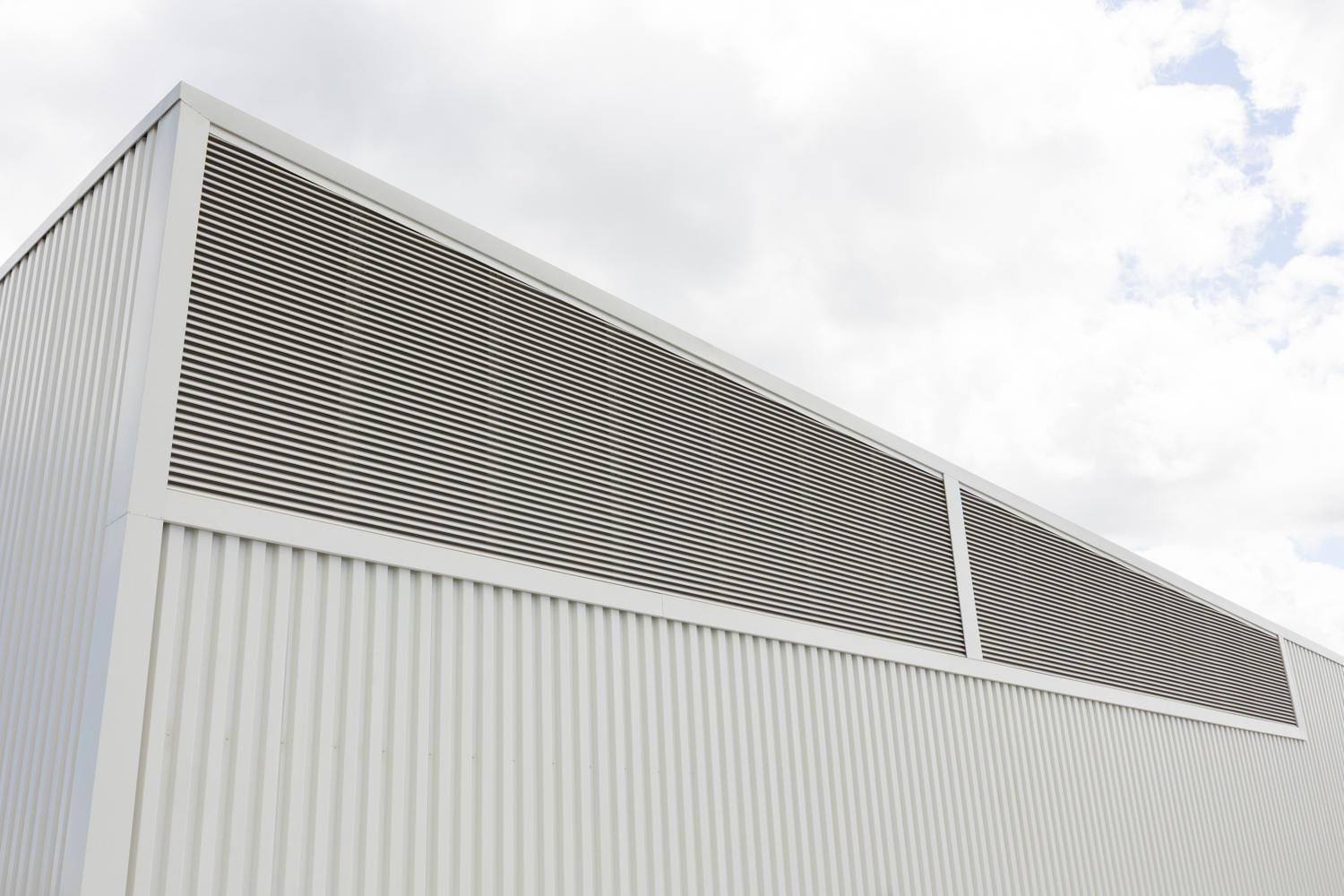
A standard ventilation louvre is designed to move air efficiently, but acoustically it's effectively transparent. An acoustic louvre is specifically designed to do both, but with some trade-offs.

A standard ventilation louvre is designed with one primary goal: to move air efficiently. Depending on the model, it may also provide some level of weather resistance, but acoustically it offers little to no control. In most cases, it is effectively transparent to sound, allowing noise to pass through with minimal reduction.
An acoustic louvre is engineered to perform a dual function. It still enables airflow, but it also reduces noise transmission. This becomes critical in projects where mechanical plant equipment such as generators, chillers, or large HVAC systems must be enclosed or screened while remaining ventilated. Without acoustic treatment, these openings can act as a direct pathway for noise to travel to neighbouring buildings or occupied spaces.
To address this, acoustic louvres incorporate internal baffles and sound-absorbing infill materials. As air and sound pass through the louvre, these elements work to absorb and attenuate noise energy. Depending on the design and configuration, this can result in sound reductions in the range of 10 to 22 dB.
However, this acoustic performance comes with a trade-off. The addition of depth, baffles, and internal resistance increases pressure loss compared to a standard ventilation louvre. As a result, acoustic louvres are typically deeper, larger, and require careful coordination with mechanical engineers to ensure the overall system maintains the required airflow performance.
Choosing between a standard and acoustic louvre ultimately depends on the project requirements. Where noise control is not a concern, a standard ventilation louvre will often be sufficient. But where plant noise needs to be managed or specific acoustic targets must be met, an acoustic louvre provides a more appropriate solution. In many cases, both types are used together, applying each where it performs best across the façade.