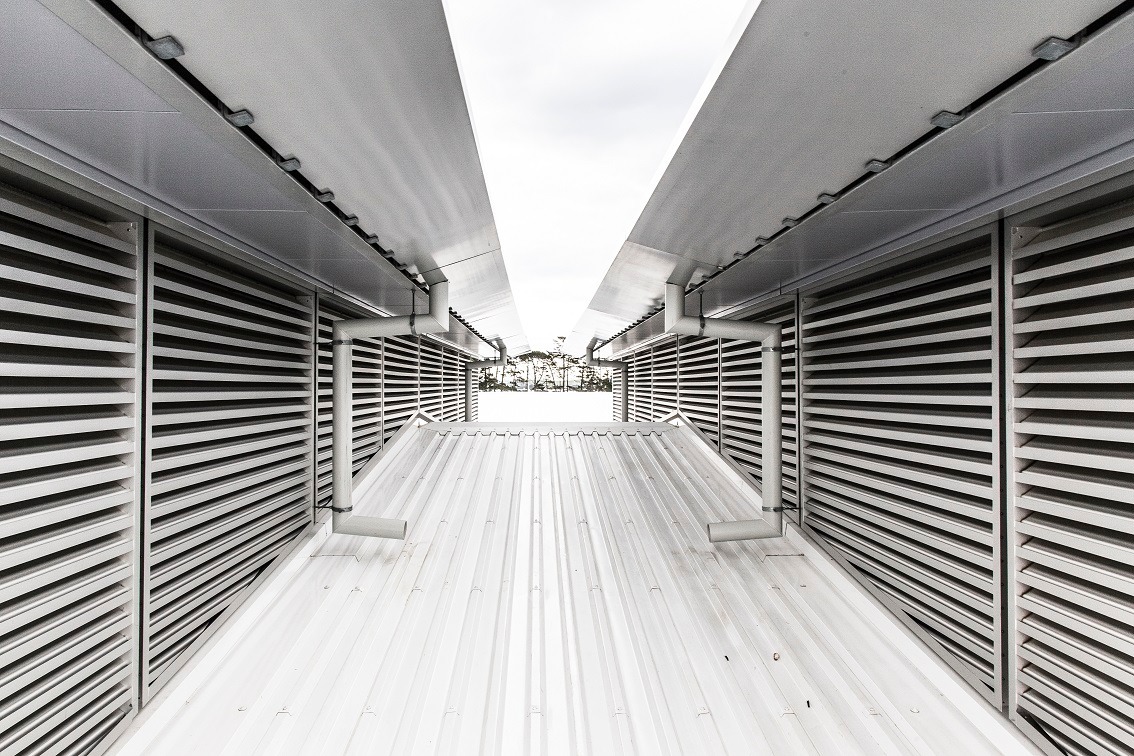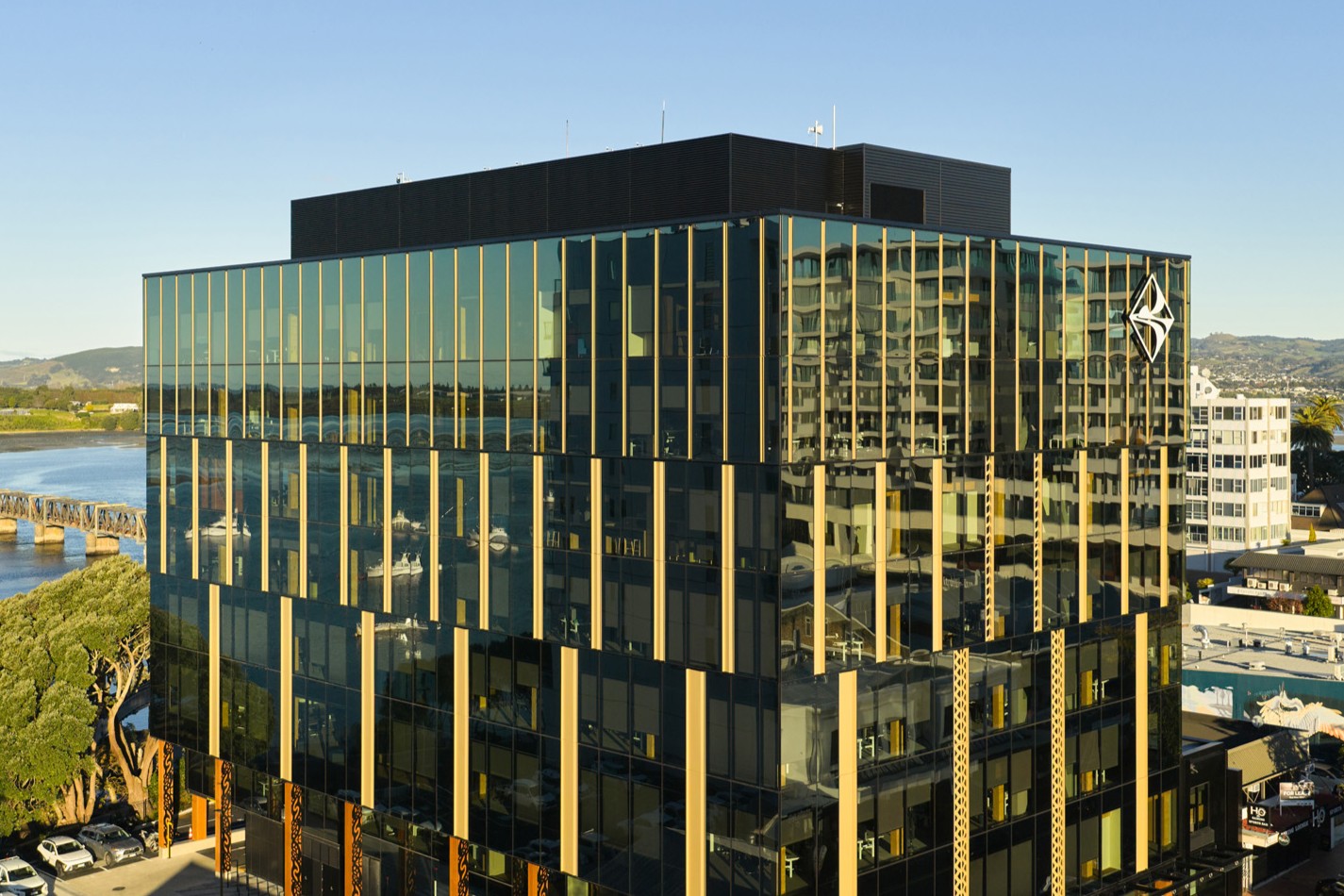
In modern commercial buildings, weather louvres play a critical role in protecting internal environments while maintaining ventilation performance. From data centres and healthcare facilities to commercial towers and infrastructure projects, these systems are expected to allow large volumes of air to pass through while preventing wind-driven rain from entering the building envelope.
What makes this challenging is that air and water behave fundamentally differently.
Air has low inertia and readily follows pressure paths and directional changes. Water droplets, however, carry mass and momentum, resisting those same directional changes. Weather louvre design is built entirely around exploiting this difference. Through carefully engineered blade geometry, spacing, depth, and drainage pathways, the system attempts to force air to change direction while encouraging water droplets to continue forward, impact surfaces, and be removed from the airstream.
The webinar explores how this separation process works in practice. It examines concepts such as droplet momentum, impingement, surface tension, turbulence, and re-entrainment, explaining how each influences real-world performance. It also demonstrates why seemingly similar louvre systems can behave very differently under identical conditions, and why visual appearance alone is never an indicator of performance.