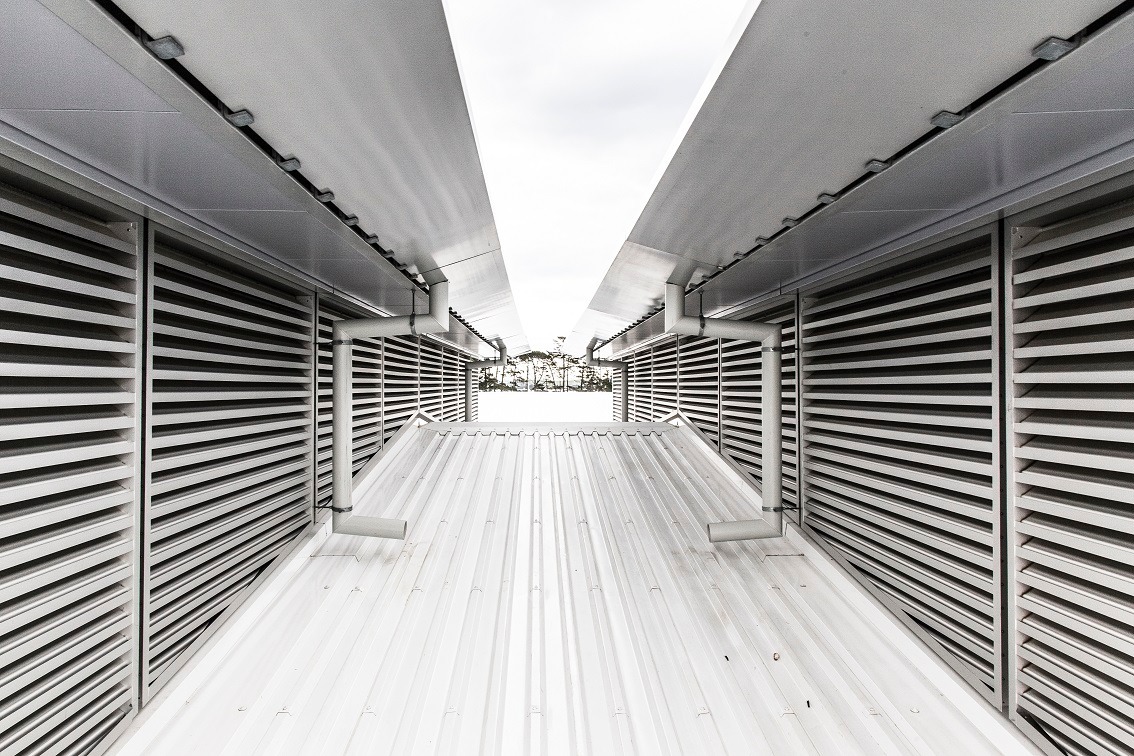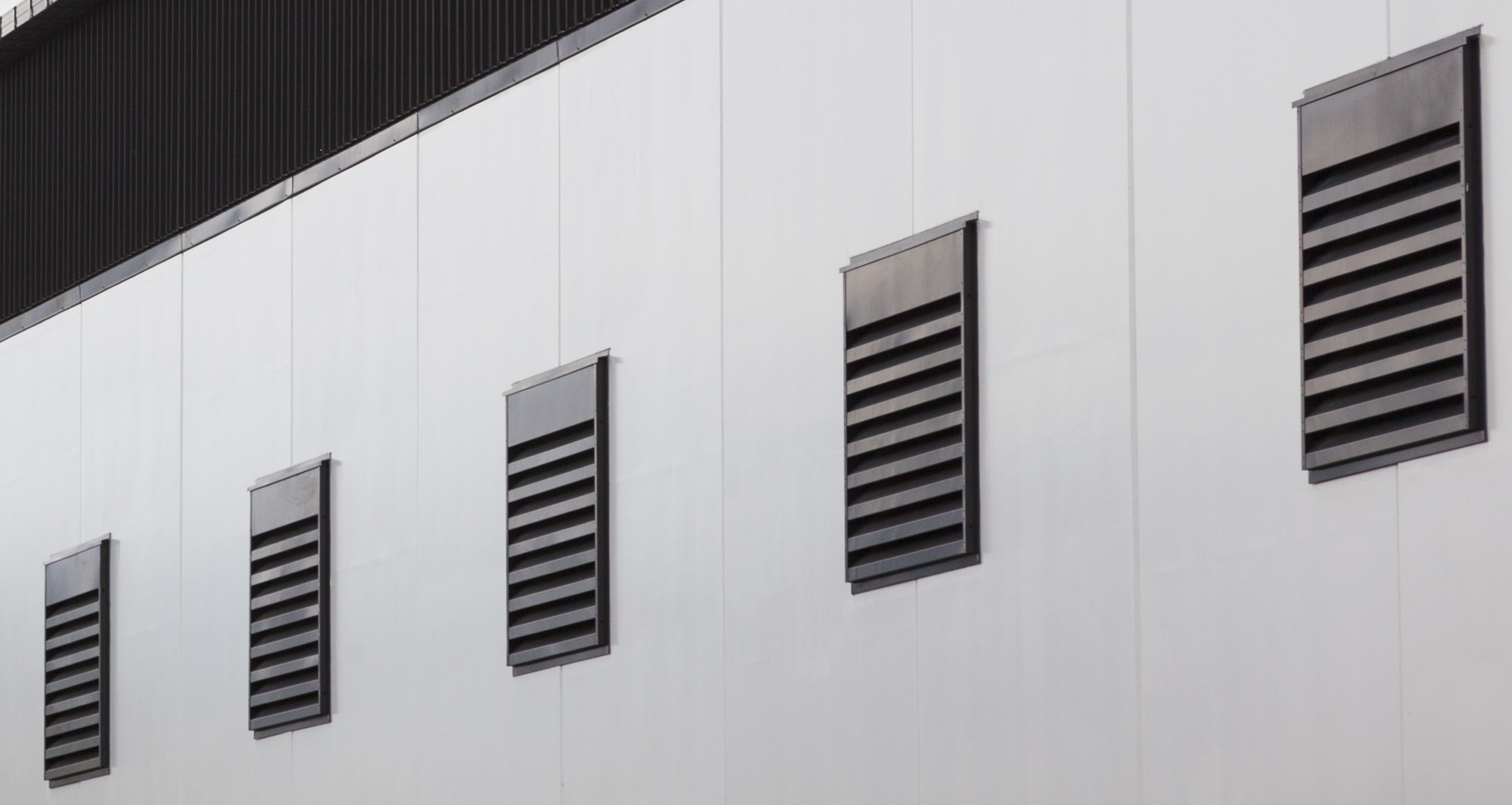
In critical infrastructure projects, louvres are more than a façade detail. They sit at the boundary between the external environment and the mechanical and electrical systems that keep a facility operating. If a building has to keep operating efficiently, louvre performance can’t be treated as an afterthought.
In today's context the definition of critical infrastructure now includes facilities like data centres, hospitals, airports, power generation and distribution sites, and telecommunications exchanges. What these projects have in common is simple: they are expected to keep running through extreme weather, high wind events, and seismic activity. If they fail, the consequences can be immediate and severe.
Louvres in these environments must do three things at once. They need to defend against wind-driven rain, allow large volumes of air to move efficiently with low pressure drop, and remain structurally stable under high wind loads. The challenge is that improving one area can compromise another, which is why performance should be verified rather than assumed.
This webinar explains the science behind louvre performance, how wind-driven rain and pressure loss testing works, and why real buildings still require project-specific engineering. If you are involved in design, specification, or delivery of critical facilities, it is a useful session for understanding where risk sits and how to make decisions with confidence.