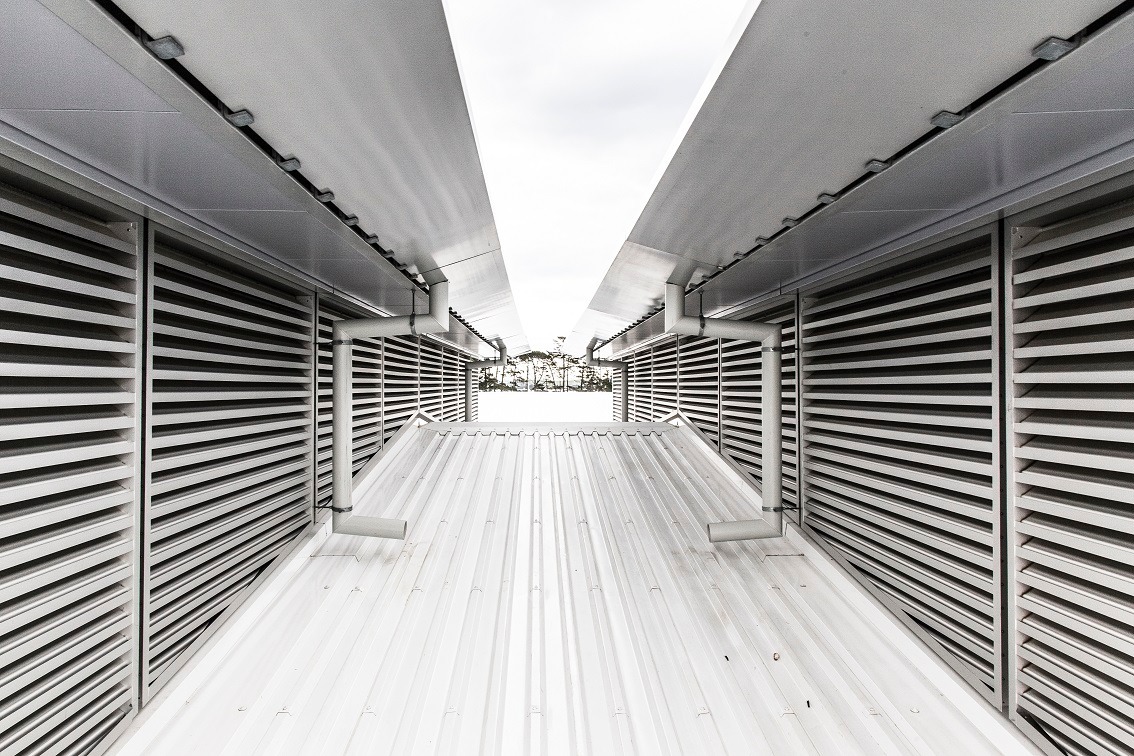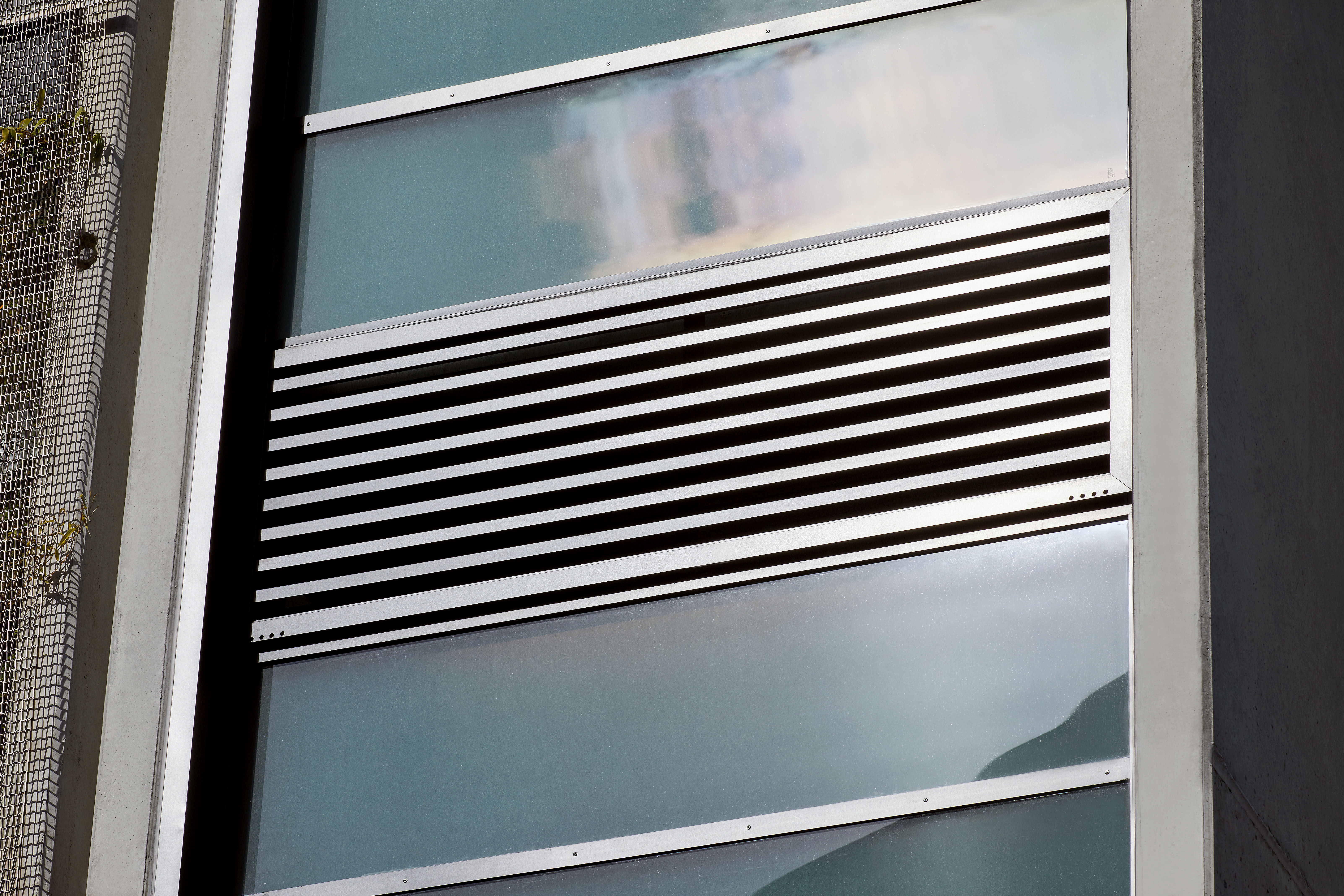
It's not always straightforward as a ventilation louvre is an intentional opening in the facade and cannot be guaranteed to be 100% waterproof, compliance is more about managing water that may enter.
A ventilation louvre is an intentional opening in the façade and cannot be guaranteed to be 100% waterproof. Clause E2 requires buildings to prevent the penetration of water that could cause undue dampness or damage to internal building elements. Compliance is therefore less about making the opening watertight and more about managing any water that may enter the system.
The key principles are that water ingress is collected, drained to the exterior, and prevented from tracking into the wall system or building interior. This is why drainable louvres are commonly specified where louvres are large, exposed, or form part of a weathertight façade.
Installation is also critical. Even a well-tested louvre can fail if it is installed incorrectly. Compliance for an aluminium ventilation louvre system will depend heavily on correct installation detailing, along with the contractor and subcontractor PS3 producer statements and supporting QA documentation.
Typical E2/AS1-aligned features include head flashings, drainable sill trays, and internal drainage channels that direct water safely to the exterior. Flashings must also be correctly integrated with the wall underlay or rigid air barrier to maintain the integrity of the façade.
From a compliance perspective, the louvre, flashing, and wall interface are assessed as a complete system rather than as individual components. Proper detailing and coordination between the louvre system and the surrounding façade construction are essential to achieving E2 compliance.