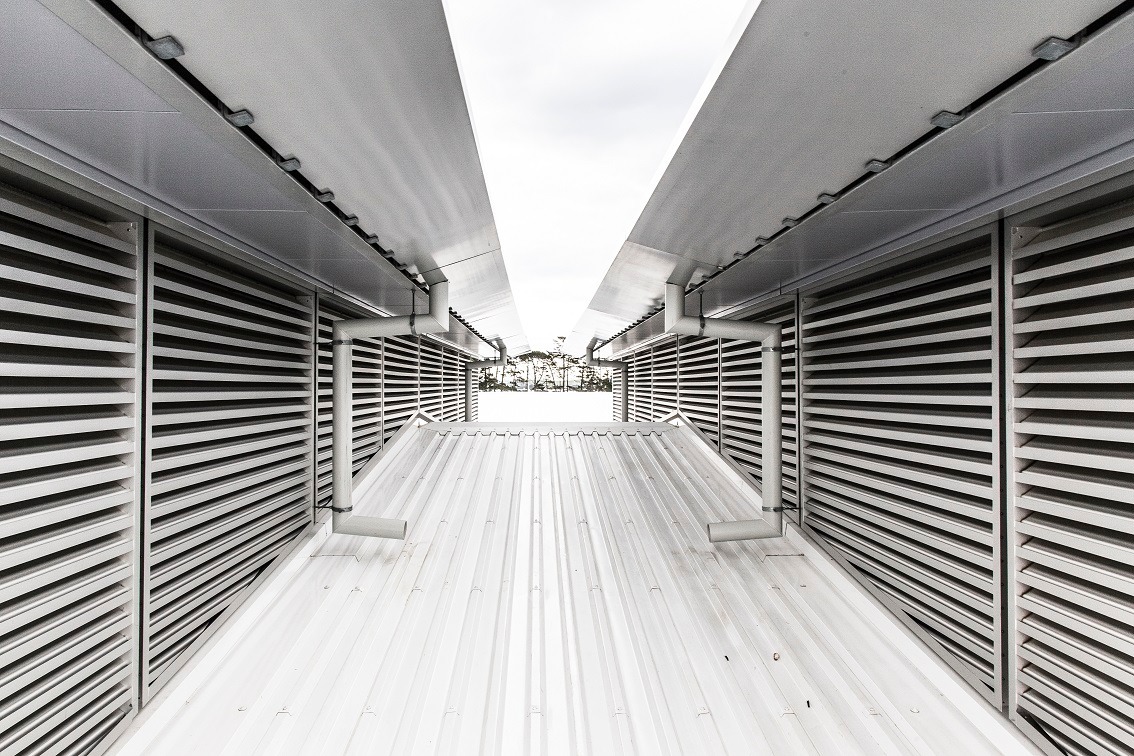
Yes — the Ventuer louvre calculator does account for the pressure loss created by secondary support members, including dead blades and other inactive areas.
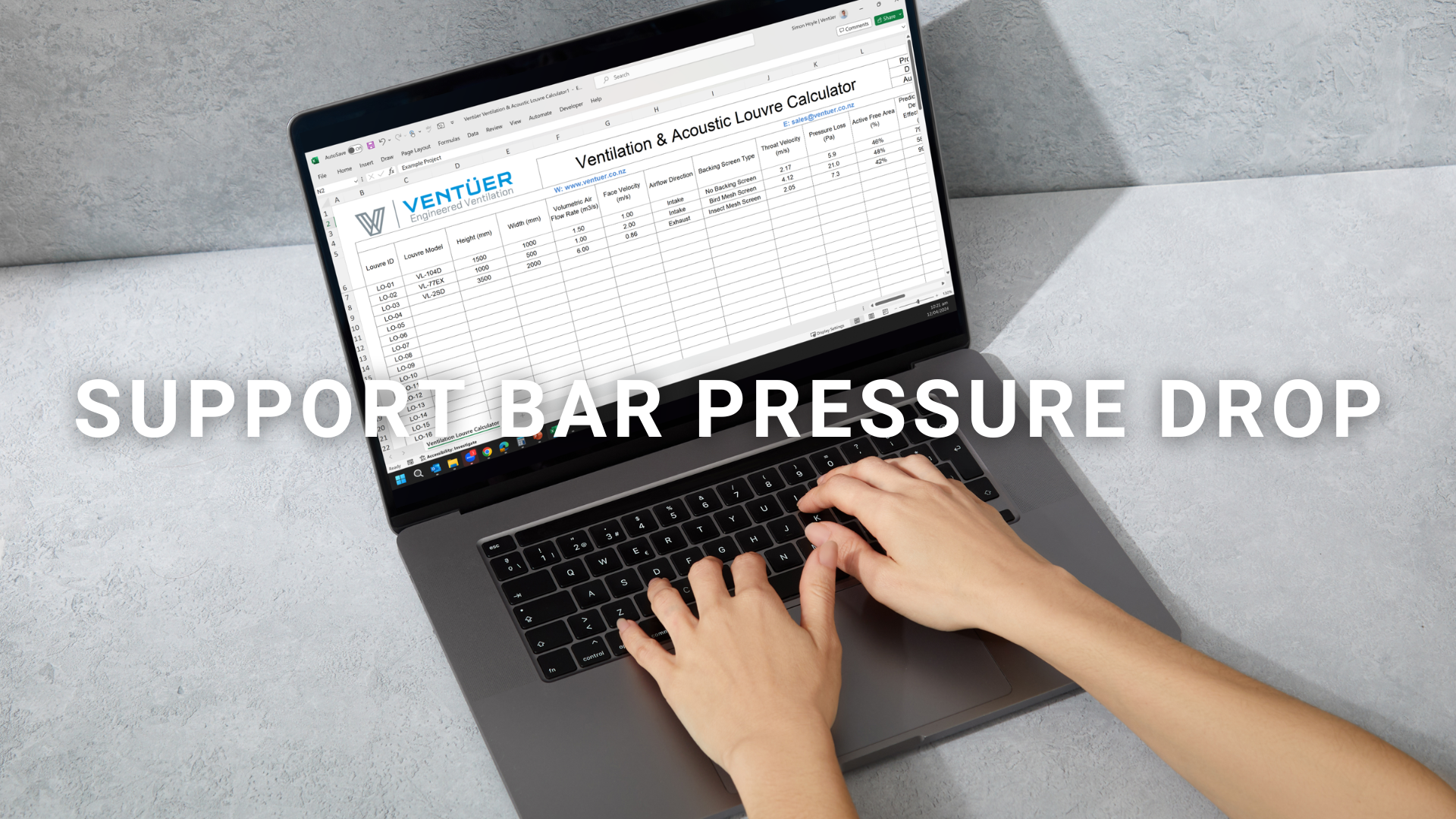
Support bars and other secondary elements such as mullions or structural framing introduce additional resistance to airflow. In simplified calculations, these elements are often ignored, which can lead to the overall system pressure drop being underestimated. Ventuer’s calculator accounts for their impact as part of the overall pressure loss model, helping provide results that better reflect real installed conditions.
This approach is consistent across all of Ventuer’s digital design tools. They are intended to help engineers and designers carry out preliminary assessments before returning to us for project-specific review and confirmation.
One of the primary tools is the Louvre Selection Software, which allows users to compare different louvre models based on pressure drop, airflow performance, rain defence class, and free area. By entering design parameters such as airflow, face velocity, or allowable pressure drop, users can quickly identify which louvre types are suitable and understand how they perform across their operating range.
Alongside this, Ventuer also provides a Louvre Calculator intended for early-stage design and feasibility work. This tool enables users to estimate free area, pressure loss, and required louvre size from inputs such as airflow and allowable pressure drop. It also allows designers to assess the effect of variables including louvre type, mesh inclusion, opening size, face velocity, and the presence of support members or inactive areas within the opening.
In both tools, the outputs are based on tested performance data. Pressure drop values are derived from measured aerodynamic performance curves, while free area calculations reflect actual product geometry rather than theoretical assumptions. Including the effect of support bars and inactive areas helps ensure the results are more representative of real project conditions.
These tools are commonly used during concept design, feasibility studies, and early pricing exercises. They provide fast guidance for common design questions such as required opening size, expected pressure drop at a given airflow, achievable rain defence class, and whether a louvre is appropriate for intake, exhaust, or mixed-use applications.
While the tools provide a strong starting point, they do not replace detailed engineering review. Once a preferred solution is identified, Ventuer’s engineering team can refine the selection to suit the specific project requirements, including wind loading, façade configuration, acoustic performance, and mechanical system constraints.
The result is a faster path to a realistic design outcome. The calculator accounts for the effect of support members and inactive areas within the opening, while Ventuer’s engineering team ensures the final selection is fully validated for the project.