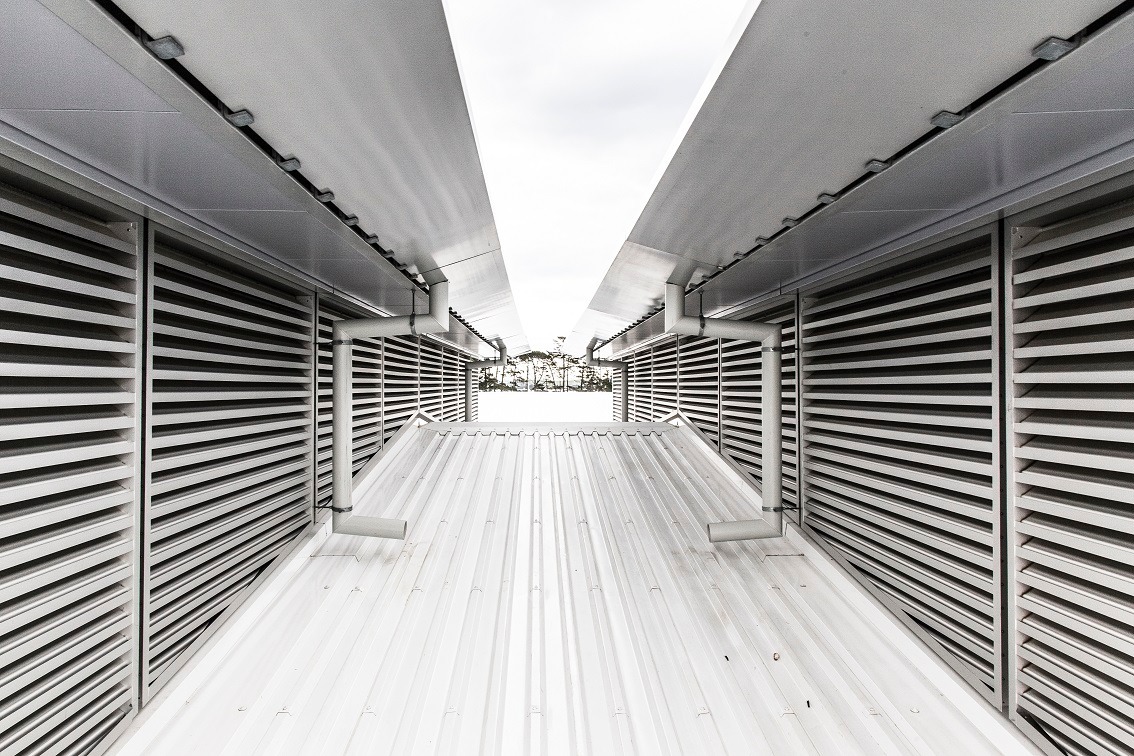
Wind-induced noise isn't always predictable, but with the right engineering and full-scale wind tunnel testing, potential issues can be identified and addressed before installation.

Wind-induced noise is one of the more challenging aspects of louvre design because it depends on far more than the louvre itself. Blade profile, wind speed, wind direction, building geometry and local turbulence can all influence whether a louvre remains quiet or produces unwanted noise.
Unlike mechanical airflow noise, wind-induced noise is caused by the interaction between natural wind and the louvre. Phenomena such as vortex shedding, blade resonance and frame vibration can occur even when a product has performed well during standard laboratory testing.
Performance standards such as EN 13030 and AMCA 500-L provide valuable information about weather defence and pressure loss, but they are not designed to assess how a louvre behaves under real wind conditions. On an actual building, wind rarely approaches a façade at a constant speed or angle. It accelerates around corners, changes with terrain and building height, and creates turbulent airflow that can affect both structural behaviour and acoustic performance.
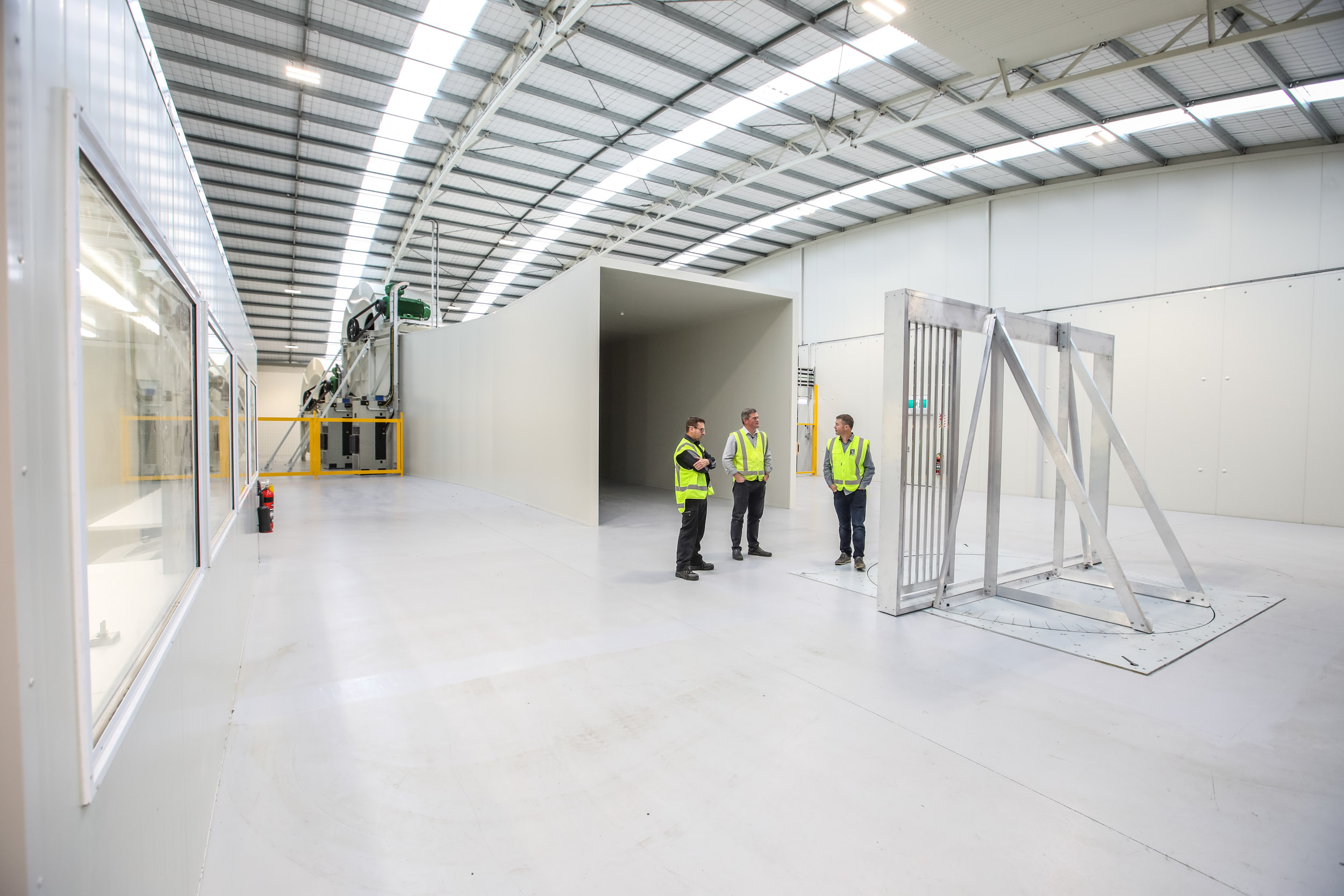
To better understand these effects, Ventüer partners with INSOL in Invercargill, home to the Southern Hemisphere's largest open-jet wind tunnel. Unlike laboratory performance testing, wind tunnel testing evaluates how a full-scale louvre behaves under realistic conditions. Samples are installed using the same geometry, fixings and support details that would be used on the building, while wind speed and direction are varied to replicate real-world scenarios.
Throughout testing, engineers assess blade and frame movement, vibration and resonance, potential rattles or tonal noise, fixing performance and overall stability under turbulent wind. Rather than producing a simple pass or fail result, the testing provides valuable engineering insight into how the system performs before it reaches site.
For noise-sensitive buildings, bespoke façades or projects exposed to high winds, early wind tunnel testing can identify potential issues before fabrication begins. This allows blade spacing, stiffness, damping or fixing details to be refined before they become costly on-site problems.
In simple terms, weather defence testing tells us how well a louvre keeps out rain, pressure loss testing tells us how efficiently it moves air, and wind tunnel testing tells us how it behaves on a real building in real wind.
While certified performance testing provides the benchmark, wind tunnel testing adds another layer of confidence for projects where acoustic performance and structural behaviour are critical.