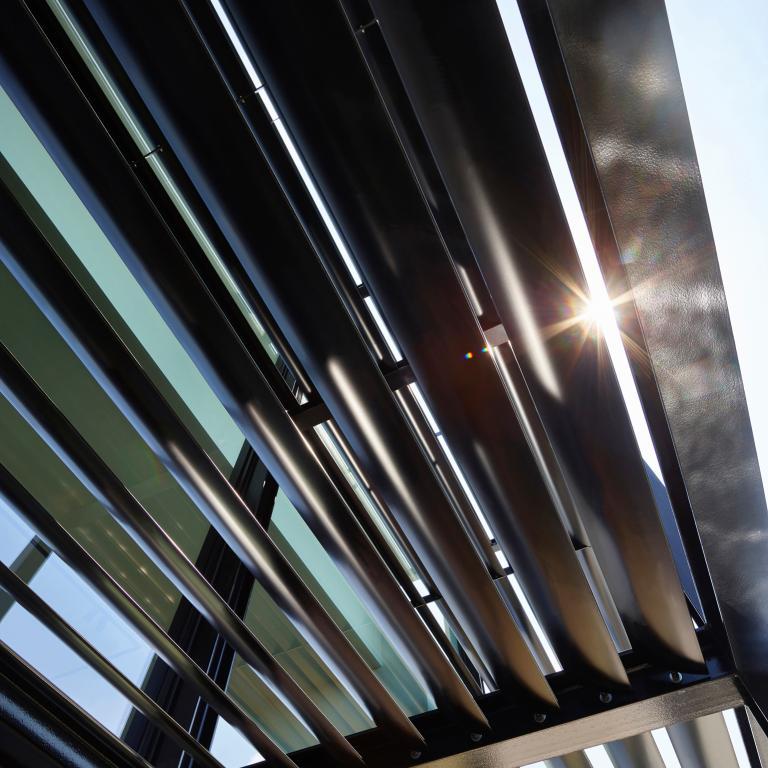
When aluminium is exposed to sunlight and changing temperatures, it naturally expands and contracts.
When aluminium is exposed to sunlight and changing temperatures, it naturally expands and contracts. While this movement may seem insignificant, it can become an important consideration when designing larger louvre systems and building façades.
Aluminium expands by approximately 0.023 mm per metre for every 1°C increase in temperature. For example, a 6-metre length of aluminium exposed to a 40°C temperature change can experience around 5.5 mm of movement.
If this movement isn't properly accommodated, it can lead to distortion or unwanted noise, such as thermal creaking. This is why expansion gaps, slotted fixings and appropriate support details are important considerations during design and installation.
In this short FAQ, Ventuer's Technical Lead, Benjamin Sommerville, explains how thermal expansion works, why darker finishes can be particularly affected by solar heat, and what needs to be considered when incorporating aluminium louvres into building façades.