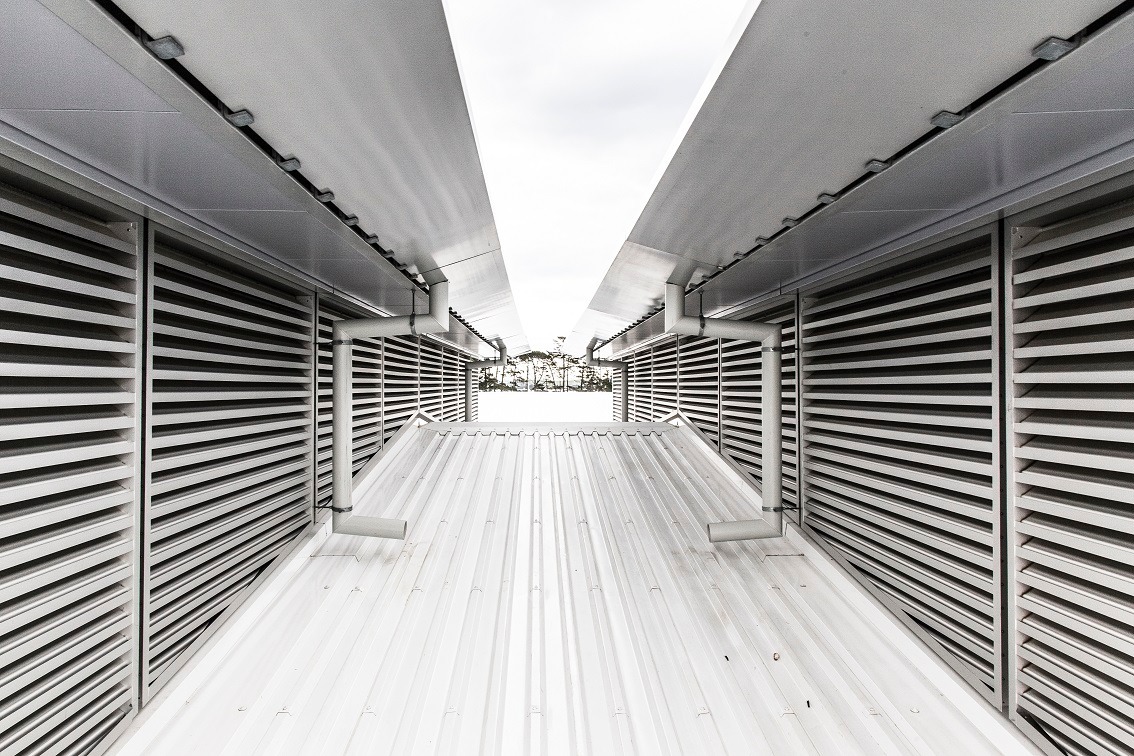
Behind every well-designed louvre is a deep understanding of airflow and how it interacts with the built environment. Modern engineering increasingly relies on digital tools to predict this behaviour precisely, such as Computational Fluid Dynamics (CFD).
Computational Fluid Dynamics (CFD) at its core is a computer-based simulation method to analyse how liquid and gas flows perform within a real-world building or industrial environment. At Ventüer, CFD analysis plays an essential role in the way we design, test and optimise our ventilation, acoustic, and smoke louvres. It allows our engineering team to enhance performance in ways far beyond what traditional physical testing alone can achieve, allowing us to create our high-performing engineered ventilation products.
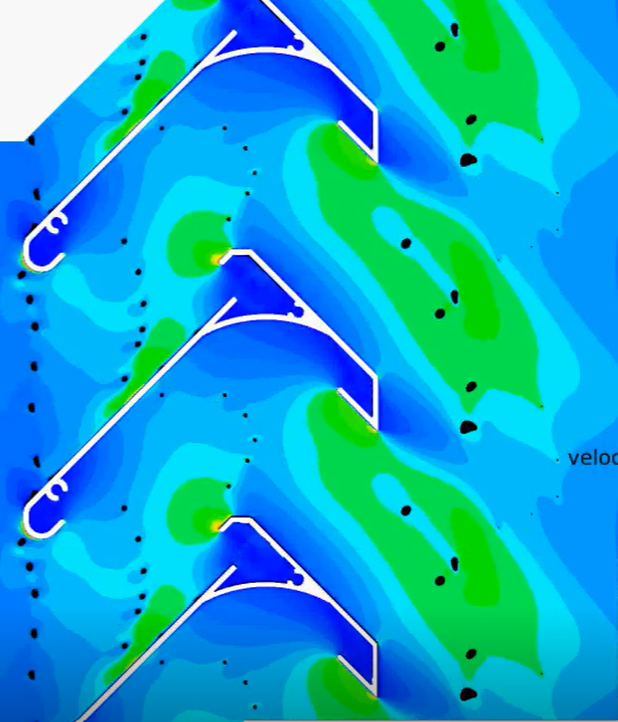
By simulating the movement and interaction of airflow before anything is built, CFD allows us to “see the invisible”, revealing how air moves around our louvres, inside ducts and across building façades virtually. These insights inform design decisions, mitigating risk and allowing us to deliver the required performance with precision and confidence.
Predicting airflow performance
One of the most fundamental benefits of CFD is its ability to accurately predict airflow behaviour through and around a louvre.
Using detailed 3D modelling, engineers can calculate:
• Pressure drop
• Effective airflow area
• Velocity distribution
• Turbulence
• Recirculation zones
Understanding these factors early ensures the final louvre selected will perform exactly as required once installed. This is especially important for applications such as data centres and plant rooms. If the system suffers from airflow inefficiencies, the environment can experience performance losses, higher energy consumption and equipment strain, costing money over time.
Optimising blade shape and spacing
Even the slightest adjustments to blade geometry can drastically change aerodynamic performance. CFD allows engineers to test multiple blade configurations quickly and measure how effective each variation’s airflow is. When designing a louvre, factors include the angle of the blades, curvature, spacing, profiling, and overall depth. Because CFD modelling is repeatable and precise, we can quickly identify the most efficient design for each specific project. The result is a ventilation system that delivers superior performance without compromising on aesthetics or structural integrity.
Improving Weather Protection
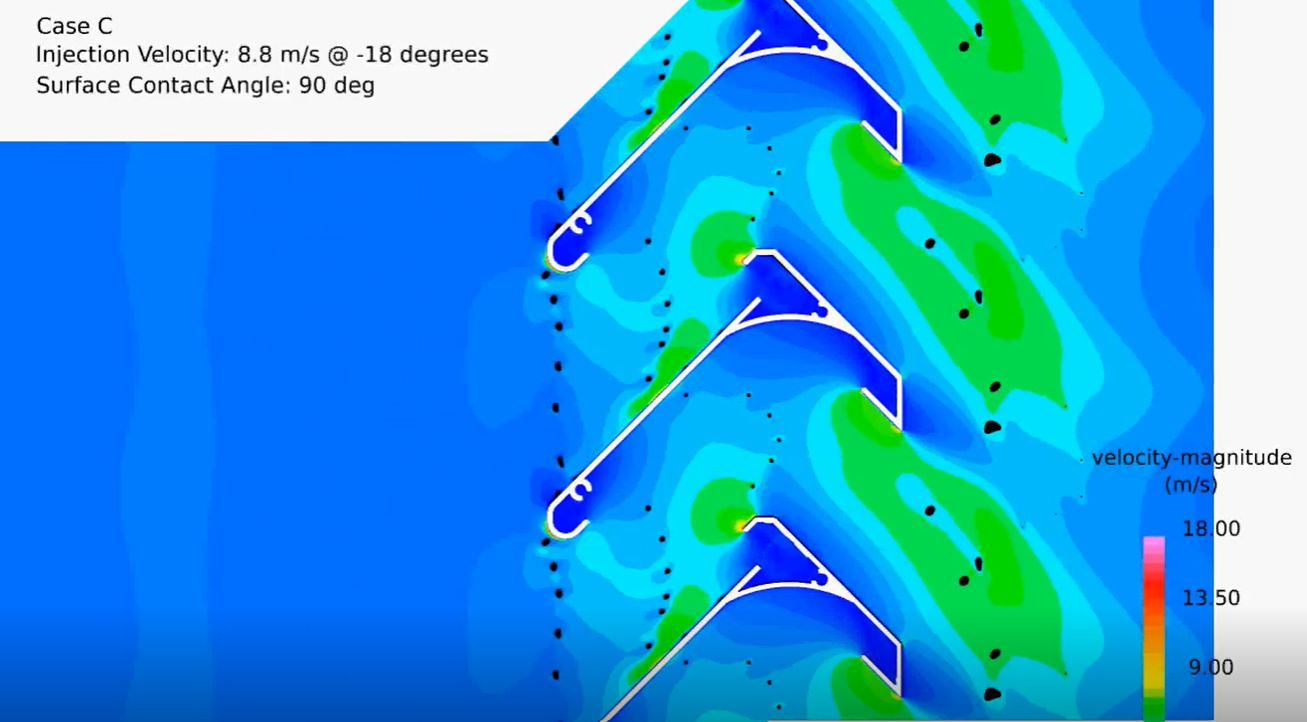
In many cases weather resistance is a critical function for façades. By simulating wind-driven rain, pressure differentials and water droplet trajectories, CFD shows exactly how water behaves as it approaches and interacts with the blades, before real-world testing takes place.
From this, our team can minimise water penetration, improve rain defence, optimise overlap and adjust design channels and features that redirect moisture. CFD allows us to simulate light showers, heavy rain, high winds, and other weather events that are difficult to replicate with physical testing, to ensure the final product offers the highest protection against these conditions.
Accounting for Complex Real-World Conditions
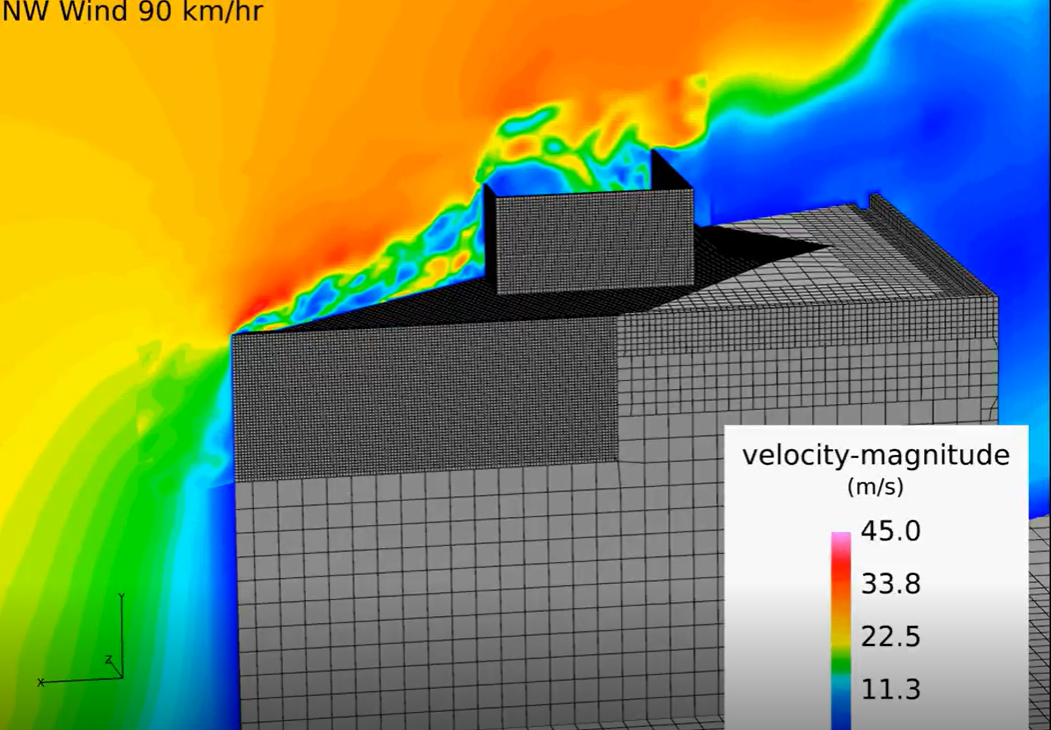
Every building interacts with its environment differently. Factors like surrounding buildings, terrain, wind patterns and façade design can influence how air behaves. CFD accounts for turbulence created by neighbouring structures, pressure zones from taller buildings, air contamination and climate variations in coastal and high-wind regions. Modelling project-specific conditions allows Ventüer to tailor each louvre design to the unique challenges we face across projects.
CFD as a Tool for Architects and Clients
CFD isn’t just a tool for engineers. CFD can also help architects and teams working on projects see how airflow interacts with their building design. Colour-coded graphs make complex data easy to interpret by showing flow paths, velocity maps and pressure distributions. For architects, these graphs can help decide design intent, demonstrate compliance, inform façade geometry, reduce project risk and support any other decision-making.
Reducing Physical Prototyping
Compared to traditional louvre testing, CFD doesn’t require full-scale prototypes to be manufactured beforehand, saving time, money and resources. Better airflow design means improved system efficiency. By minimising pressure drop and eliminating unnecessary resistance, CFD-optimised louvres help reduce energy usage and overall HVAC loads. In an era where energy performance is increasingly important, CFD offers tangible environmental benefits.
Evolution of CFD
Compared to even a decade ago, CFD tools are far more advanced today than ever before. Faster computing, more accurate modelling tools and enhanced weather simulation all contribute to greater accuracy and reliability. These advancements have made CFD an everyday part of modern engineering, especially in industries focused on airflow, ventilation and environmental control, such as louvres.
Continuing to Deliver Better Louvres through Engineering
At Ventüer, CFD is deeply integrated into the way we design and refine our louvres. CFD has allowed our engineering team to design countless louvre models for every scenario, evaluating airflow behaviour, assessing weather performance, testing multiple designs and optimising real-world conditions, all before the manufacturing process begins.
By combining CFD modelling with physical prototyping and testing and many years of engineering experience allows us to deliver louvre designs that offer exceptional performance, reliability and long-term durability.
As CFD continues to evolve, it remains central to our commitment to providing engineered ventilation, acoustic and smoke louvres like no other.
For support with product selection, design guidance, or any project-specific louvre requirements, visit the Ventüer website to explore our readily available selection tools or contact our team for advice on your next project.